
Last updated November 18, 2026






Free written scope consultation - allowances, timeline, and change-order rules on paper before a single trade is scheduled
Construction Warning Signs: A Fullerton Homeowner’s Reference Guide
Most guides to construction warning signs describe failures you can’t miss: a crack you can fit a finger into, a ceiling stain the size of a dinner plate, a floor that slopes when you walk across the room. By the time those appear, the expensive work has already started. The signs that actually matter in Fullerton show up months earlier, and they’re subtle: a door that latches a little tighter in August than it did in March, a hairline crack that runs one direction instead of another, a stain on a block wall that reappears after every rain. This guide teaches you what to look for, in what order, and which patterns are worth watching versus which are worth calling about.
Quick Answer
Construction warning signs in Fullerton homes typically appear in a predictable sequence: doors and windows that begin sticking or racking, hairline cracks in stucco that grow or change direction, rooflines that sag rather than settle, and drainage that pools in the same spot after every rain. Early signs are cheap to monitor. Late signs are structural. The difference between the two is almost always timing, not luck.
Styles & brands we work with
- Kitchen remodeling
- Bathroom remodeling
- Home additions & ADU
- Roofing
- Windows & doors
- Driveway & pavers
- Fence
Table of Contents
- Reading Crack Geometry in Fullerton’s Mid-Century Housing
- Doors, Windows, and the Movement They Reveal
- How to Read a Roofline From the Curb
- Efflorescence on Block Walls: When It Matters
- Drainage Signs After the First Real Rain
- Electrical and Plumbing Red Flags During a Project
- The Reading Order: What to Check First
- Common Mistakes to Avoid
- When to Call a Professional
Reading Crack Geometry in Fullerton’s Mid-Century Housing
Not every crack means structural movement. In Fullerton’s mid-century housing stock, the majority of cracks you’ll find on stucco walls are shrinkage cracks that formed the first year the stucco cured and have never moved since. The ones that matter have a different geometry, and once you learn to read the difference you can stop worrying about most of what you see.
Here’s how the two types compare:
- Cosmetic shrinkage cracks: hairline, usually under the width of a credit card edge, vertical or diagonal in random patterns, stable across seasons. They don’t change width from wet season to dry season, and they don’t run in a continuous line across the wall.
- Structural movement cracks: diagonal, running from the corner of a door or window toward the ceiling or floor. They widen over time, and they often appear in matching pairs on the opposite corners of the same opening.
- Differential settlement cracks: step-patterned in block walls (following the mortar joints rather than cutting through units), or horizontal in stucco above or below a foundation line. Horizontal cracks are the ones to take most seriously.
- Racking cracks: vertical in the corners of a room, appearing on both sides of a wall simultaneously. These usually point to movement in the foundation under one side of the structure.
Single-story slab-on-grade houses on the west side of Fullerton tend to show settlement cracks first around door and window openings, because those are the weakest points in a stucco wall. Two-story homes built on raised foundations, more common toward the older neighborhoods near downtown, tend to show racking at the corners of rooms and sticking windows on the second floor. The pattern tells you where the movement originates, and that’s what a structural evaluation is for. We work with homeowners across Fullerton on additions, residential construction projects, and structural work, and the crack pattern is the first thing we look at before any plan is drawn.
Doors, Windows, and the Movement They Reveal
Interior doors are the most sensitive instruments in the house. A door that swings cleanly in spring and drags on the jamb in late summer is telling you the wall it’s hung in has moved. That can be seasonal wood swelling, but in a Fullerton slab house it’s often a sign of differential foundation movement, particularly if only some doors do it and the drag appears on the top corner rather than along the strike plate.
The pattern to watch:
- Check every interior door in the same week. One sticking door is weather. Three sticking doors on the same side of the house is movement.
- Look at the gap between the door and the jamb at the top and the bottom. A consistent 1/8-inch gap all around means the door is still hanging true. A gap that pinches at the top corner means the wall has rotated.
- Open and close each window from the outside track. Windows that slide cleanly from inside but bind from outside rarely mean a window problem; they mean the frame has racked.
- Write down the date and the door. Monitoring means repeat measurement, not a single observation. If the same door sticks for three months, it’s not seasonal.
Doors that begin sticking in the space of one season, or windows that no longer latch at all, are the point where monitoring turns into a call. A window that has pulled out of square and no longer seals is also a water intrusion risk, and in Fullerton, water intrusion into a wall cavity is much more expensive to address than the movement that caused it. If you’re replacing windows anyway, our windows & doors team checks the opening for racking before installation. New windows set into a bowed frame will never seal correctly.
How to Read a Roofline From the Curb
Stand on the sidewalk across the street, look at your roof, and pick a single line along the ridge or eave. Now walk slowly along the property line while keeping your eye on that line. Very few homeowners do this, and it catches a surprising number of problems before they show up as interior stains. There are three sag patterns worth knowing, and each points to a different problem.
- A dip along a straight eave line: usually a sign of rafter or truss damage at one or two locations, from a long-term leak, insect damage, or a past impact that was never fully addressed. The sag tends to be localized, often in the same spot on both sides of the roof.
- A wavy or rippling line along the eave: almost always sheathing rot or delamination underneath the shingles. The shingles haven’t failed visibly yet, but the plywood under them has lost its stiffness, and the sag pattern follows the panel joints.
- A sagging ridge line, sagging at the center of the roof: indicates ridge board or ridge beam movement. In older Fullerton homes with stick-framed roofs, this can mean the ridge has begun to separate from the rafters, or that a past remodel removed a supporting wall without re-engineering load transfer.
Any of these three patterns is worth having evaluated before you plan a re-roof. Replacing shingles over damaged sheathing or a moving ridge hides the problem for a few years and then doubles the eventual cost. When we start a roofing project, we look at the sheathing before pricing the shingles, not after, because the condition of the structure underneath determines whether the project is a simple replacement or a repair-and-replace.
Efflorescence on Block Walls: When It Matters
Efflorescence is the white, powdery staining that appears on concrete block, brick, and stucco when water moves through masonry and evaporates on the surface, leaving mineral salts behind. A block wall that shows efflorescence near the top of the wall where rain hits directly is normal weathering. A wall that shows efflorescence at the base, near planters, or where a downspout discharges is a different story: it means water is saturating the soil against the wall and pushing through the block from the inside.
The locations to inspect first:
- Behind or beside planter boxes: soil held against a block wall holds moisture for weeks after rain. If the wall has no drainage behind the planter, hydrostatic pressure builds and water migrates through the block itself.
- Below downspout discharge points: a downspout that discharges straight onto soil less than 3 feet from a block wall concentrates years of roof water at one location. Efflorescence at the same spot as a downspout almost always confirms the connection.
- Along the base of rear yard walls: where grading slopes toward the wall, water pools against the footing. This is common on Fullerton lots where the rear yard has been built up over time with fill dirt or planter additions.
- On the side of a wall facing a neighboring lot: where a neighbor’s yard is graded higher, water moves through the wall and shows up on your side. This is a boundary drainage issue, and it’s worth documenting.
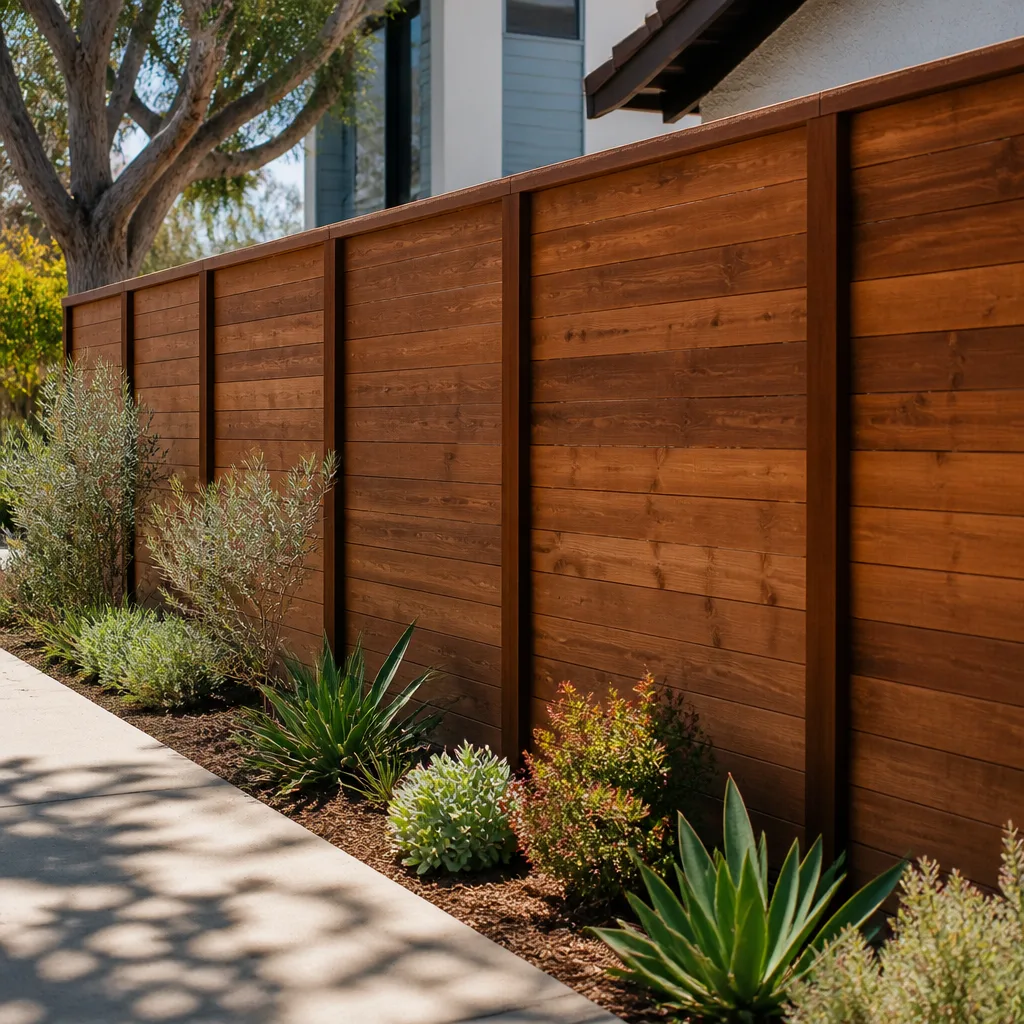
Efflorescence alone isn’t structural failure. Efflorescence that reappears at the same location every wet season, or that’s accompanied by spalling block faces or visible cracking, means water has been in the wall for a long time. At that point, the recommendation is usually to fix drainage before touching the wall, because any wall repair without drainage correction fails again within a few seasons. Fencing and boundary walls are one place we discuss drainage correction routinely. Our fence installation process starts with a conversation about soil and drainage, because a vinyl or ornamental fence panel set into wet soil against a saturated block wall will shift within a year.
Drainage Signs After the First Real Rain
The first significant rain of the season in Fullerton tells you more about your property’s grading than any dry-season inspection. Water behaves according to the slope you have, not the slope you intended. There are three things to observe after a real rain, and only two of them are worth acting on.
- Where does water pool? Puddling in a low spot in the yard is normal and usually drains into the soil within hours. Puddling that stays for more than 24 hours after the rain stops, in the same location, is a grading problem: either the lot is graded toward the house, or a low spot has no outlet.
- How fast does the ground absorb? Water that disappears within a few hours indicates good soil absorption. Water that stands for days in a flat spot, even a shallow one, indicates compacted or heavy soil, which is much more common on Flat lots that have been regraded or covered with landscaping fabric and mulch.
- Where does the water flow when it runs? Watch the direction water moves across the patio, driveway, or planting beds. If the flow moves toward the foundation, that’s a warning sign regardless of how fast the standing water drains.
Grading problems show up faster than soil problems because the water always ends up in the same place. Soil absorption problems look different: the water spreads and sits rather than pooling in a single spot. Both matter, but they call for different fixes. The critical threshold here is the foundation: any water that reaches the foundation wall within 24 hours of a real rain is a drainage warning, whether the yard absorbs well afterward or not. On the driveway side, a hardscape surface that begins to puddle near the garage door is often the first sign that the driveway slab has settled. Our driveway & pavers work routinely corrects grading before laying new surfaces, because pavers laid over bad grading move within one wet season.
Electrical and Plumbing Red Flags During a Project
During any significant construction project, you’ll see parts of your house you don’t normally see: wall cavities opened up, subfloors exposed, ceiling access panels off. This is the single best window you’ll ever have to catch electrical and plumbing problems, and it shouldn’t be wasted. We flag every one we find, but a homeowner who knows what to ask for gets better use of the discovery window.
The electrical signs to ask your contractor to flag:
- Aluminum branch wiring in walls opened during a remodel. Common in homes built during the late 1960s and early 1970s. Aluminum wiring at switches and outlets requires special connectors and should be evaluated by a licensed electrician before walls close up again.
- Overcrowded junction boxes with more wire nuts than the box is rated for. Usually the result of past DIY additions. Ask your contractor to document with photos before drywall goes back up.
- Ungrounded three-prong receptacles in older Fullerton homes where a prior remodel replaced two-prong outlets without adding a ground. Ask the electrician if the ground is real or a bootleg connection before walls close.
- Panels with no available breaker space when you’re adding a kitchen circuit, bathroom fan, or ADU subpanel. It’s much cheaper to address panel capacity during rough framing than after the project is done.
On the plumbing side, the signs to flag during wall openings:
- Galvanized steel supply lines mixed with copper. The transition point is where corrosion concentrates, and it’s worth evaluating before you close the wall.
- Cast iron drain lines showing rust scale or cracking at the fittings. They’re common in mid-century Fullerton homes and typically have a finite remaining service life.
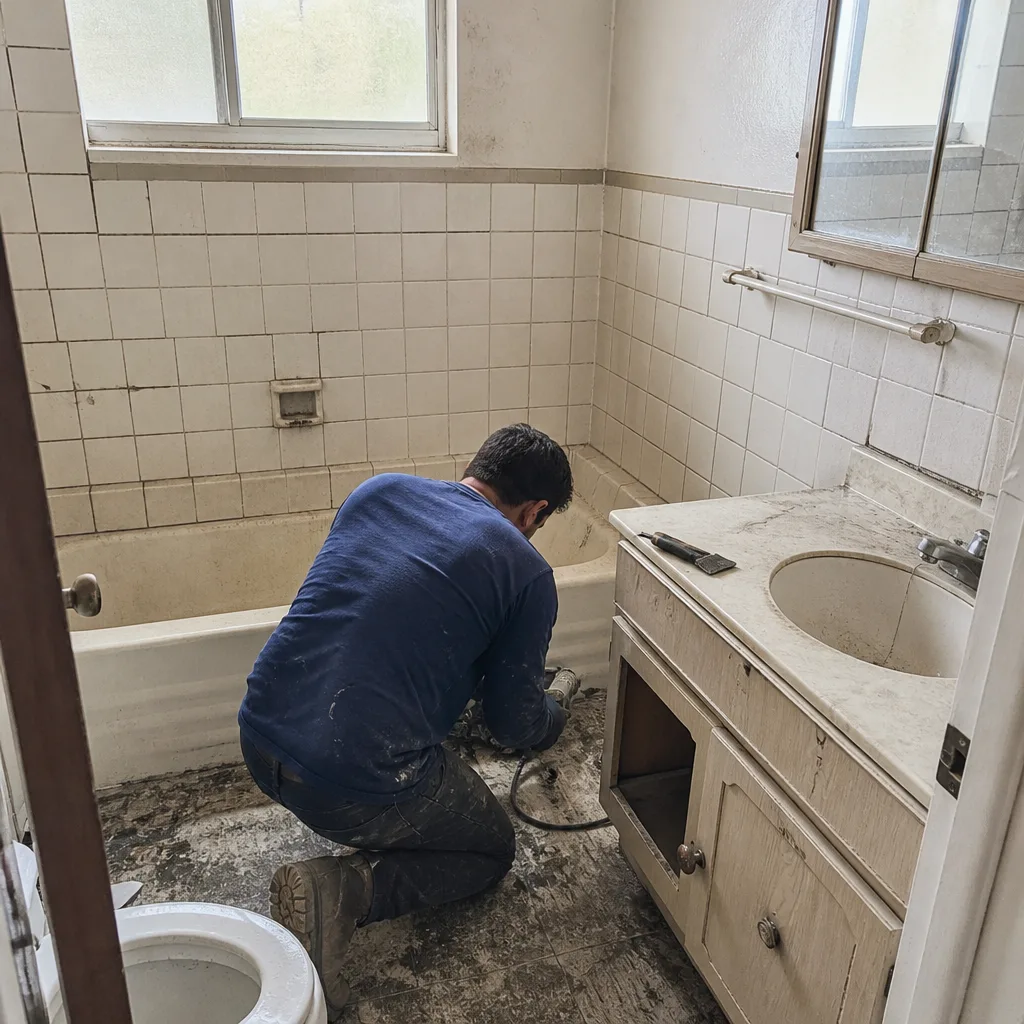
- Slow drains or drain smells in a bathroom being remodeled. These often indicate a partially collapsed sewer lateral or a missing vent connection, and the fix is much cheaper while the floor is open.
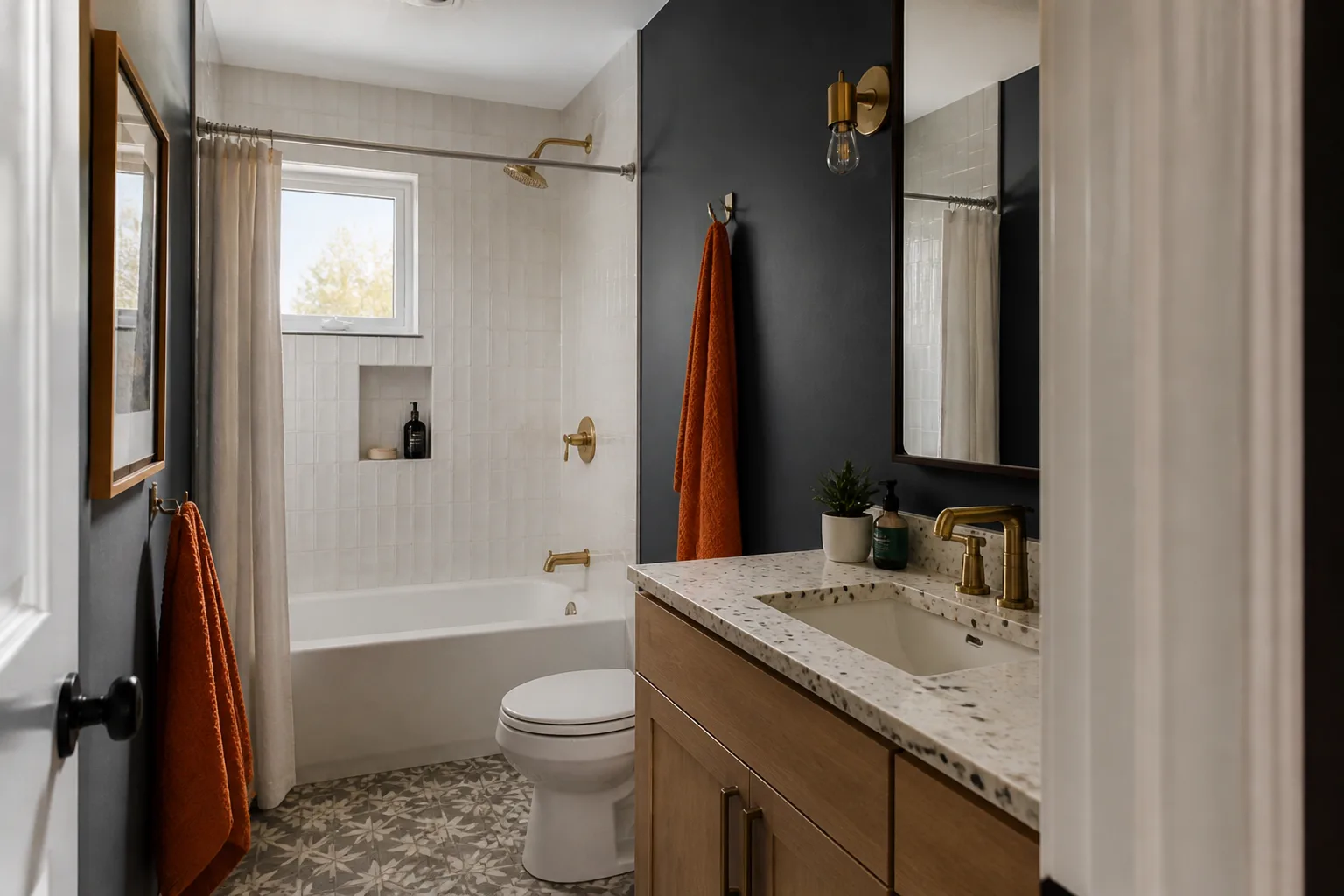
If your project is a bathroom or kitchen, our remodel crews flag every one of these as a matter of process. A bathroom remodeling project that opens up the floor and walls without inspecting the supply, drain, and vent lines above and below wastes the best diagnostic window you’ll have this decade. And any work involving the electrical panel, gas lines, or main supply wiring should always go to a licensed electrician or plumber. Those are the two trades we never let a homeowner handle themselves, even when the fix looks simple.
The Reading Order: What to Check First
When you’re trying to decide whether what you’re seeing is a warning or normal, the order you check things in matters. Some signs are more reliable than others, and some are more sensitive. Here’s the sequence we use when a homeowner asks us to walk through a house and give an honest read on condition.
- Doors, all of them, in the same week. Most sensitive early indicator. Three or more sticking doors on one side of the house is the strongest single signal of foundation movement.
- Roofline from the curb. Second best early indicator, because it’s readable from a distance and it doesn’t change gradually without showing up as a change in the line.
- Cracks, in the order of the geometry list above. Start with horizontal cracks (highest priority), then step-pattern in block, then diagonal from openings, then shrinkage cracks last.
- Windows from the outside track. Windows that bind from outside but not inside indicate frame racking, which connects to the same story as the doors.
- Block wall efflorescence. Zero in on planters, downspouts, and the base of walls first. Efflorescence high on a wall is a cosmetic issue. Efflorescence low on a wall is a water issue.
- After the first real rain: drainage. The only sign on this list that requires weather. Take photos of standing water and set a timer.
- During any project: wall cavities. Take photos before they close, and ask specifically about electrical, supply, and drain line condition.
The point of a reading order is to make a judgment call about urgency, not to diagnose the house yourself. If the sequence above produces a clear pattern, you know to call someone. If it produces nothing, you know to repeat the survey in six months. That’s the whole point of monitoring: a baseline now and a comparison later is worth more than any single inspection. For homeowners planning a larger project, we walk through this exact sequence during the initial consultation. That matters most for the more structural work like home additions & ADU projects, where the foundation and framing are going to be tested.
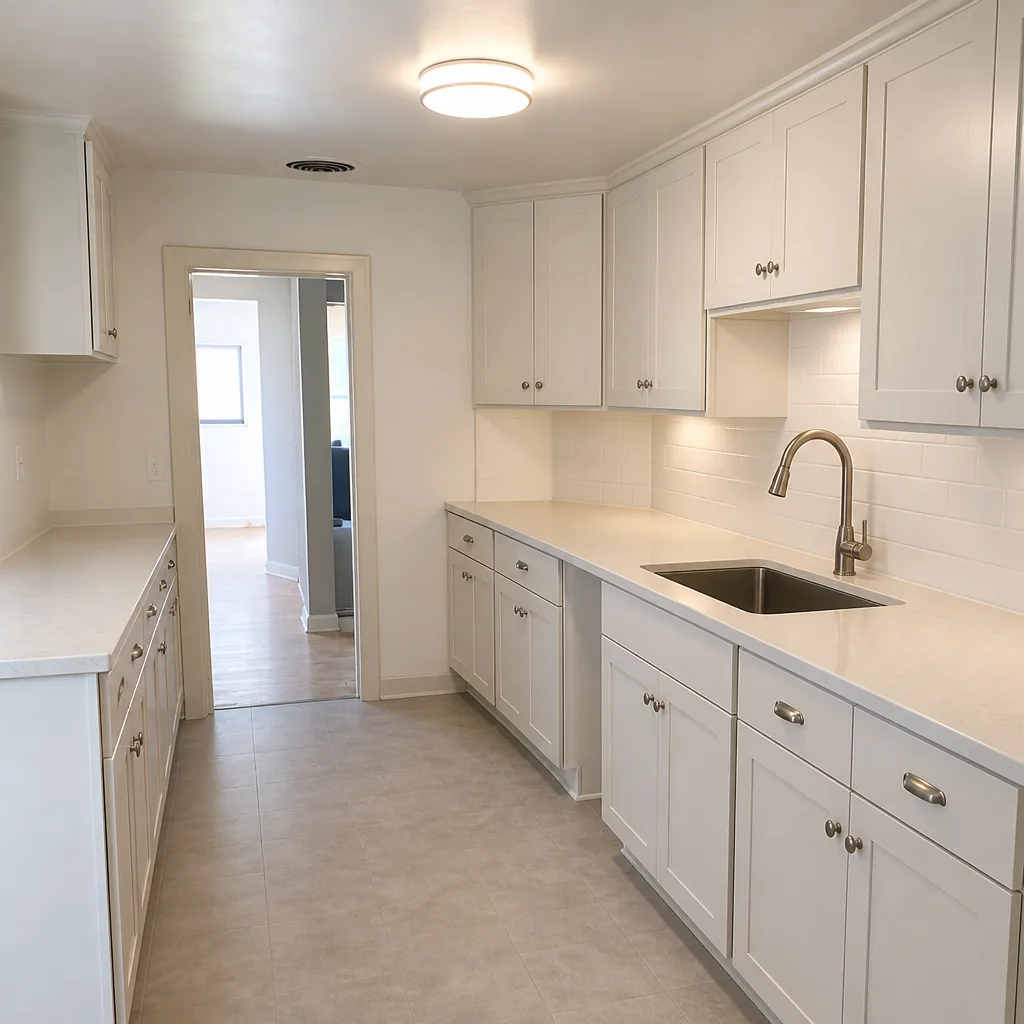
See the difference
 Before
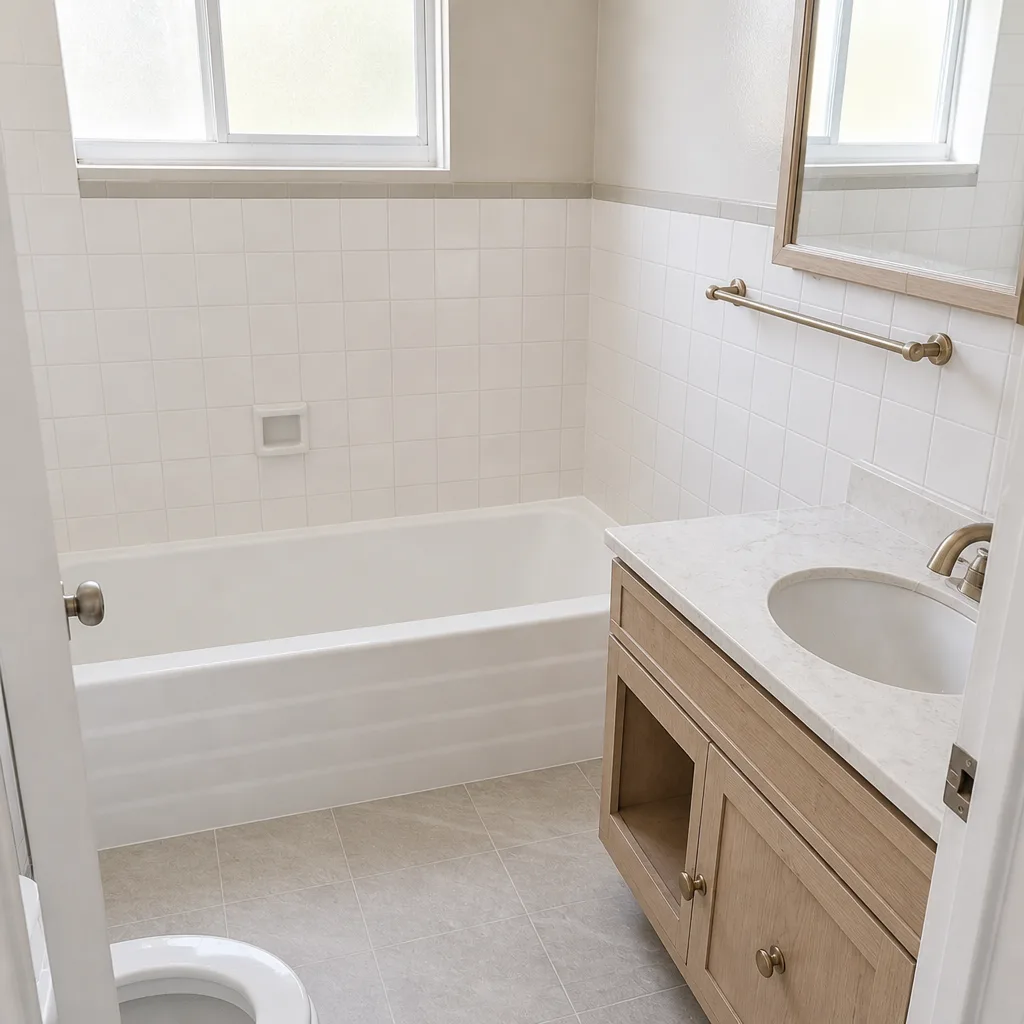 After
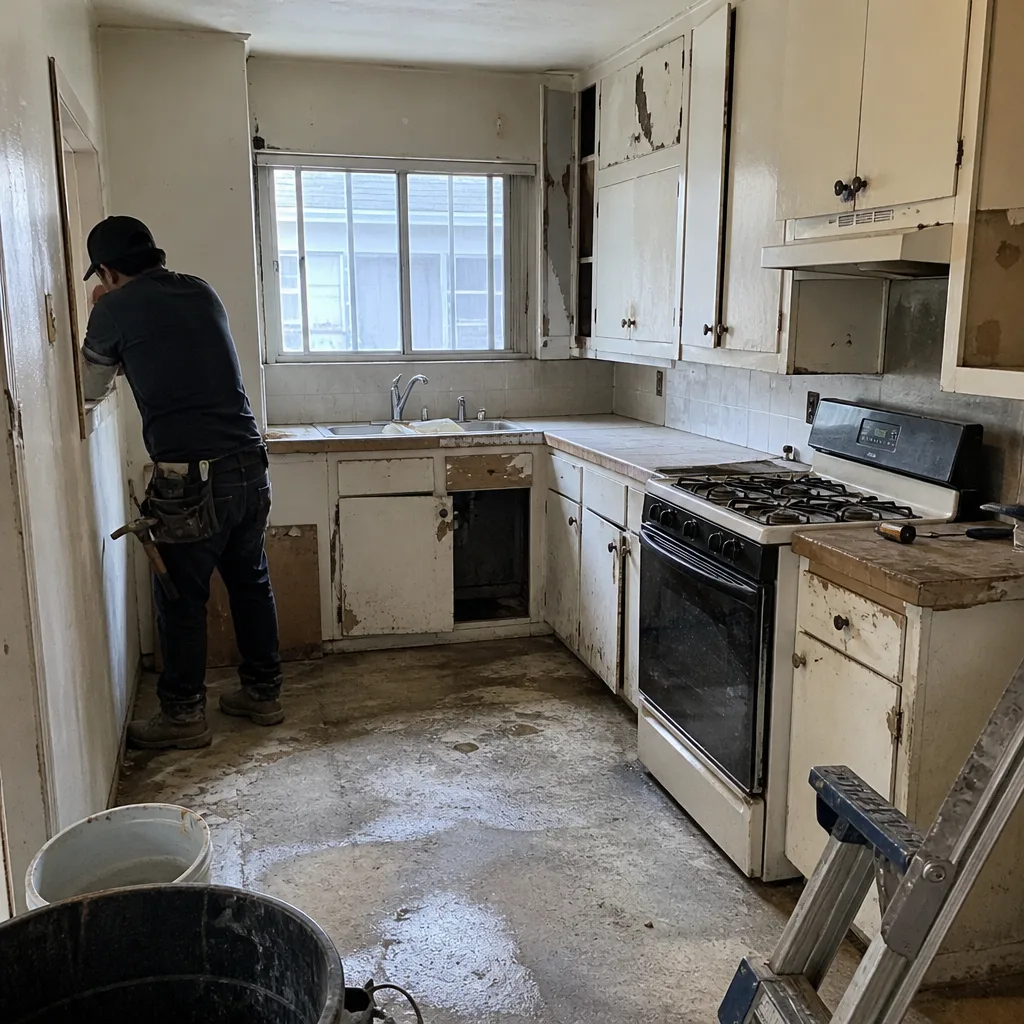 Before
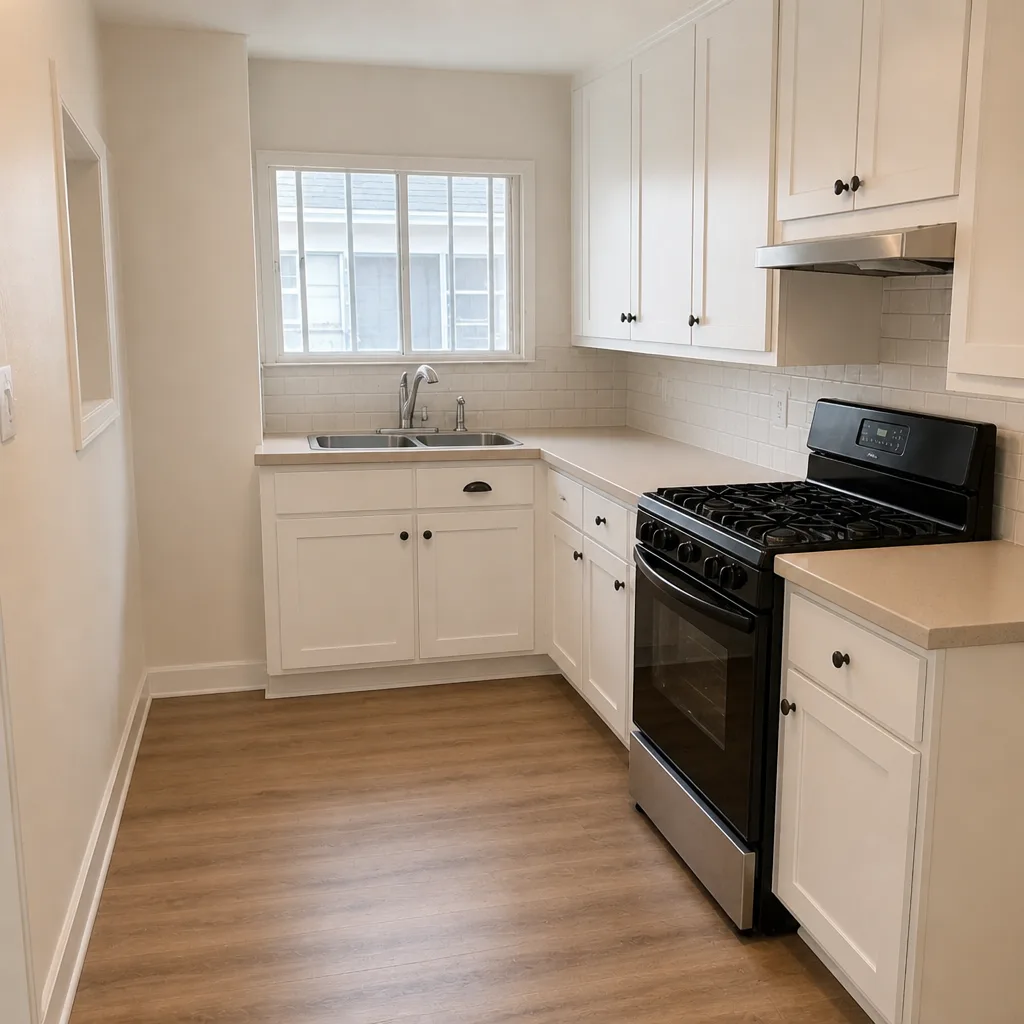 After
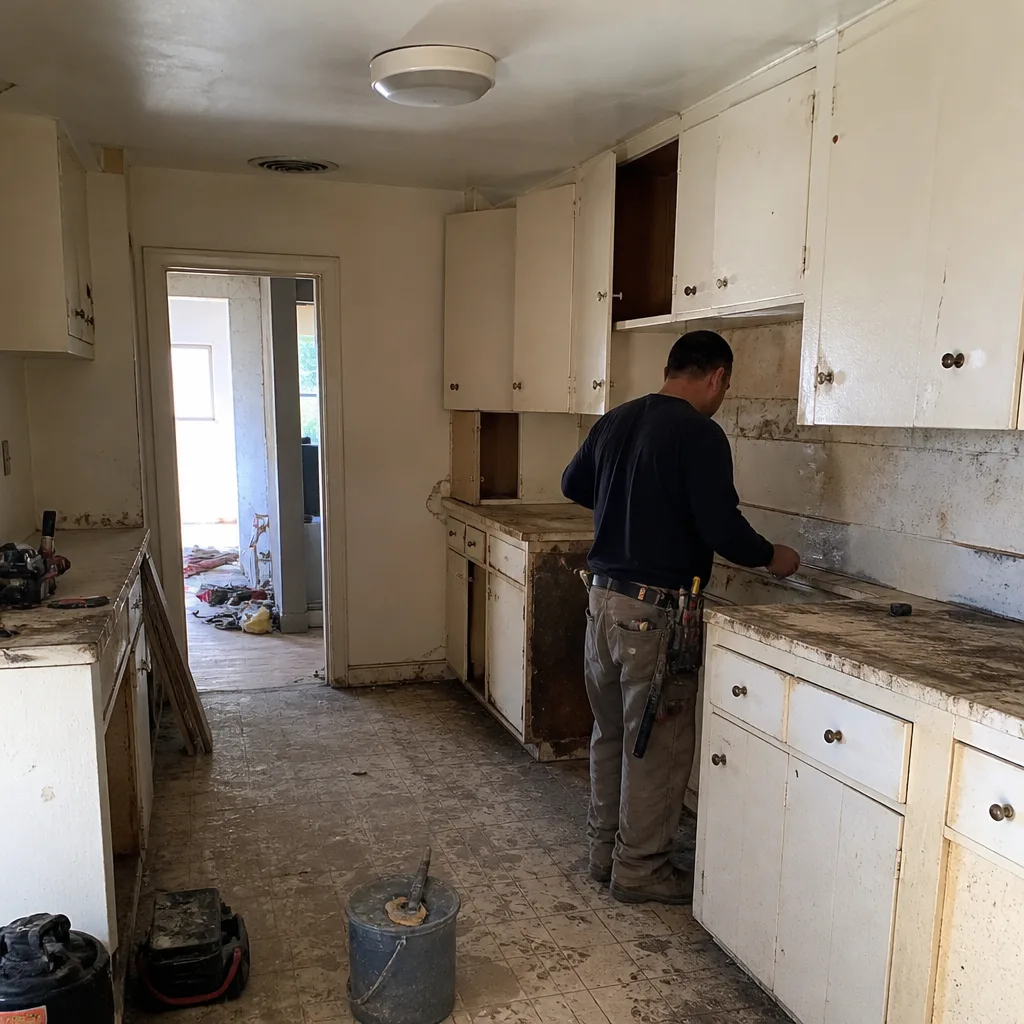 Before
 After
Why Material Choice Affects What You’ll See Later

The warning signs above describe what happens to a house over time. But what a homeowner sees later is often shaped by what was installed earlier. A re-roof with commodity shingles will show more sag and shadowing under Sun than a re-roof with a heavier architectural shingle. An exterior wall built with a fiber cement siding (we regularly specify James Hardie for Fullerton’s sun exposure) will hold paint longer and show fewer moisture-related cracks than a lower-grade substitute. A prefab ADU from a modern manufacturer like Boxabl arrives with the structure already tested at the factory, which means fewer post-installation movement issues than an equivalent stick-built addition on marginal soil.
This is why we name materials at every stage, from GAF and CertainTeed shingles on the roof to Kohler, Toto, Grohe, and Moen fixtures in bathrooms to Belgard and Techo-Bloc hardscape on the driveway. You choose the brand, we handle the build. When you’re making a decision that will define what your house looks like and how it behaves over the next twenty years, brand is not marketing language, it’s specification.
Common Mistakes to Avoid
- Measuring a crack once and deciding it’s fine. A crack that is 1/16 inch wide today and 1/8 inch wide in six months is a moving crack, and the width at any single observation doesn’t tell you anything. Take a photo with a coin or measuring tape held against the wall for scale, and take another photo three months later.
- Assuming a sticking door is a door problem. In Fullerton’s mid-century houses, a sticking interior door almost always points to movement in the surrounding wall. Adjusting the hinge fixes the symptom and leaves the cause untouched.
- Re-roofing over a visible sag without inspecting the sheathing. The sag in the roofline is the cheapest problem to catch. Covering it with new shingles hides it for a few years and then doubles the eventual cost.
- Treating efflorescence on block walls as a cosmetic staining problem. A white stain on a block wall that reappears after every rain at the same location is a real drainage issue, and wall repair without fixing the drainage fails within a season or two.
- Letting a contractor close walls without documenting what’s inside. Open wall cavities during a project are a one-time diagnostic opportunity. If your contractor doesn’t photograph the electrical, supply, and drain lines before closing them, you lose the record. Ask, in writing, before demolition starts.
- Reading water pooling as a neighbor’s problem. A low spot in a yard that holds water for more than 24 hours after rain, in the same location across wet seasons, is a grading warning even if the water doesn’t immediately reach the house. Grading worsens over time, and the pool migrates toward the foundation.
- Waiting for the home inspection to find what a contractor would have flagged during the project. A home inspection is a snapshot at one moment in time. A contractor on site during construction sees the walls open and the subfloor exposed. Ask them to flag electrical, plumbing, and framing issues during the build, not after a sale is in progress.
When to Call a Professional
Call a professional when: three or more interior doors on the same side of the house begin sticking in the same season; any horizontal crack appears in a stucco or block wall; a roofline sags along the ridge or eave; efflorescence reappears at the base of a block wall after each rainy season; standing water around the foundation remains for more than 24 hours after a rain; a window no longer latches, sealing, or operates from outside; or a wall cavity inspection during any project reveals aluminum branch wiring, cast iron drain fitting corrosion, or a panel with no breaker space left. Those are the patterns worth spending money on.
None of them are emergencies in the same-day sense. They’re the signs that tell you to get an evaluation before the next wet season. Construction Fullerton offers free estimates in Fullerton for the projects these signs tend to lead to, whether that’s a re-roof, a drainage correction, a foundation-informed addition, or a wall repair that starts with grading. Our technicians have up to 14 years of experience reading these patterns across Fullerton’s housing stock.
Frequently Asked Questions
Structural cracks typically run diagonally from the corner of a door or window opening, appear in matching pairs on opposite corners, or run horizontally in stucco or step-patterned through block mortar joints. Cosmetic shrinkage cracks are usually hairline, randomly oriented, and don’t change width between seasons. Photograph the crack with a scale reference and re-check in three months to see if the pattern is moving. Call (844) 834-8322 for a free evaluation if the pattern changes.
Doors that stick in the dry season usually indicate the wall they’re hung in has moved, not that the wood has swelled. In a Fullerton slab-on-grade house with expansive soils, the soil shrinks in the dry season and the foundation settles slightly on one side, causing walls to rack and door tops to pinch. Three or more doors on the same side of the house in the same season is a pattern worth evaluating. Call (844) 834-8322 to schedule a free walk-through.
It depends on where the efflorescence appears. White staining near the top of the wall where rain hits directly is normal weathering. White staining at the base, behind planters, or where a downspout discharges means water is being pushed through the wall from saturated soil, and the drainage needs correction before any wall repair is attempted. Call (844) 834-8322 for a free drainage and wall assessment.
Water that disappears within a few hours is normal for well-graded Fullerton soil. Standing water in the same spot more than 24 hours after the rain stops indicates a grading problem or compacted soil. Any water reaching the foundation wall within hours of a rain is worth evaluating regardless of how fast it drains afterward. Call (844) 834-8322 for a free estimate on grading correction.
Yes, and in writing before demolition starts. Ask your contractor to flag aluminum branch wiring, overloaded junction boxes, ungrounded outlets, mixed galvanized and copper supply lines, cast iron drain corrosion, and slow drains while walls are open, with photographs. That window closes once drywall goes up. Call (844) 834-8322 to discuss a free estimate for your remodel.
Prefab and modular ADUs from manufacturers like Boxabl or Plant Prefab undergo structural testing before delivery, and the on-site work is mostly foundation and utility connections, so post-installation movement is generally less than in a stick-built addition on marginal soil. The foundation still has to be engineered for your specific lot. Call (844) 834-8322 for a free estimate on a Fullerton ADU project.
The Bottom Line
The warning signs that matter in Fullerton homes are the precursor signs: doors that stick in the same season, cracks that change width, rooflines that sag along the ridge or eave, efflorescence at the base of block walls where planters and downspouts concentrate water, and grading that pools water against the foundation after every real rain. Catching them makes an evaluation cheap and a repair manageable. Missing them turns every one of those into a structural project. Monitor the sequence, document with photos at three-month intervals, and call when the pattern is clear rather than when the failure is visible. That’s the reading order that saves the most money.
If you’ve walked through the signs and want a second set of eyes on what you’re seeing, Construction Fullerton offers free estimates and does not charge for a walk-through. Call (844) 834-8322 to schedule. We answer 24/7. Fast dispatch from 7am to 7pm, Sunday through Friday. You’ll get a written line-item quote before any work starts, and you’ll be choosing the brands at every stage, not just the contractor.
Written by the team at Construction Fullerton.