Last updated November 18, 2026



Free written scope consultation - allowances, timeline, and change-order rules on paper before a single trade is scheduled
Seasonal Construction Care for Fullerton: Year-Round Homeowner’s Guide
Most Fullerton homeowners assume their house needs the same care in April as it does in November. It doesn’t. This city runs on a rhythm that has nothing to do with the calendar most maintenance guides follow: Santa Ana winds in the fall, a hard dry stretch through summer, then the first real rain arriving on soil that’s been baked for months. The materials on your roof, your driveway and your exterior walls respond to those shifts on their own schedule. What follows is a month-by-month look at what actually happens to a Fullerton house, when to schedule exterior work so it lasts, and how to spot the damage that builds quietly between seasons. By the end you’ll know your own property’s risk windows, not a generic four-season checklist written for a colder climate.
Styles & brands we work with
- Kitchen remodeling
- Bathroom remodeling
- Home additions & ADU
- Roofing
- Windows & doors
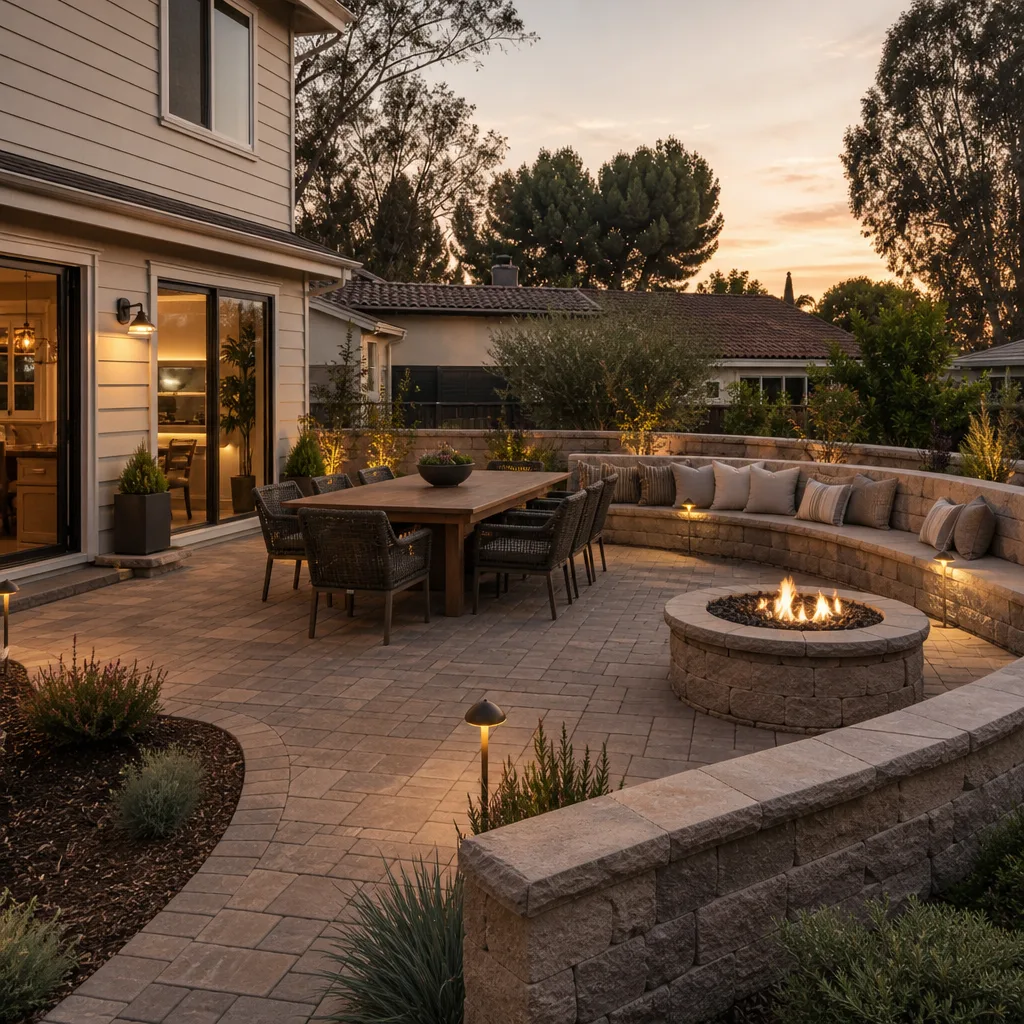
- Driveway & pavers
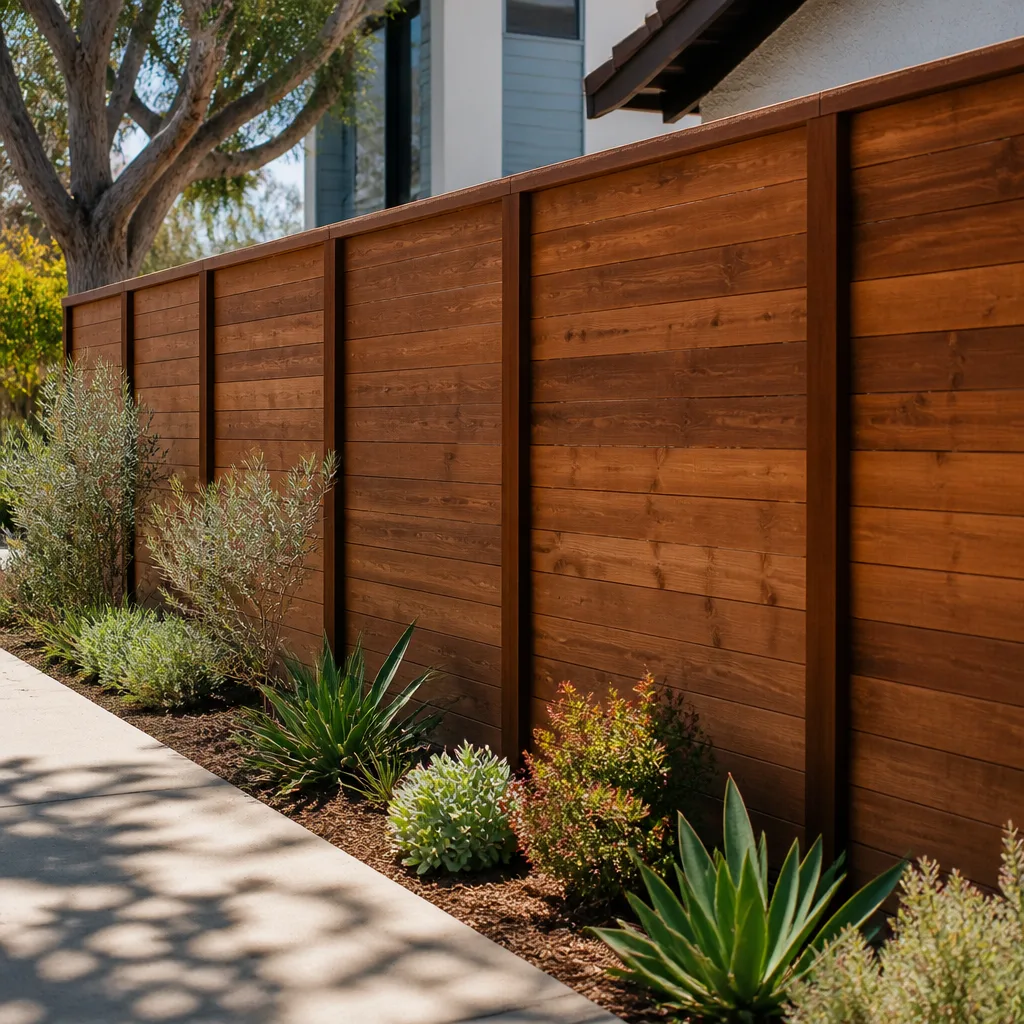
- Fence
Quick Answer
Seasonal construction care in Fullerton centers on four risk windows rather than four traditional seasons: Santa Ana wind season in fall, the dry summer stretch, the first storm runoff in late fall and winter, and post-summer ground shrinkage that stresses foundations and flatwork. The single best window for exterior painting and concrete sealing is roughly October 1 to November 15, when UV intensity has dropped, rain hasn’t arrived, and temperatures hold in a range that lets coatings cure properly. Roofing, drainage and drainage-adjacent site work should be inspected within 48 hours of any significant wind or rain event, and major interior or addition projects can run through the mild winter months with fewer weather delays.
Table of Contents
- The Fullerton Risk Calendar: Four Windows, Not Four Seasons
- Santa Ana Winds: What They Do to a Roof and the 48-Hour Inspection
- Clay Soil, Foundation Movement and the Dry-Wet Cycle
- Using Fullerton’s Mild Winter for Concrete, Stucco and Paint
- Post-Storm Drainage: The Flat-Lot Problem Nobody Reports
- Summer Project Sequencing: Why July Roofing Needs a Different Spec
- Driveways, Pavers and Fencing: Material Timing by Season
- Common Mistakes to Avoid
- When to Call a Professional
- Frequently Asked Questions
The Fullerton Risk Calendar: Four Windows, Not Four Seasons
Fullerton doesn’t hand you a clean spring-summer-fall-winter split. What it gives you is four overlapping windows of construction risk, and each one asks something different of your property. Understanding the sequence is the whole game.
- Late September through November: Santa Ana wind season. Low humidity, gusting offshore winds, and a lot of sun still hitting exterior surfaces. Roof fasteners, sealants and dried-out caulk joints take the stress here.
- December through March: the wet window. Rain arrives on soil that has spent months drying and shrinking. Drainage systems get tested, and this is when pooling, slab undermining and stucco moisture show up.
- April through June: the productive build window. Mild temperatures, low rain risk, and the best conditions of the year for flatwork, paint and stucco. Projects move faster here.
- July through September: peak UV and heat. Adhesion, curing times and material expansion all behave differently, and roof work needs a spec that accounts for it.
The mistake is treating any of these as “the off season.” In Fullerton, there’s no off season. There’s just a question of which materials and which trades are best served by the conditions in front of you. The contractors who understand that sequence schedule work so it performs, not so it simply gets done.
Santa Ana Winds: What They Do to a Roof and the 48-Hour Inspection
Santa Ana winds are the single most underrated stress event on a Fullerton house. These are dry, gusting offshore winds that arrive with low humidity, and they do two things at once: they hammer anything loose, and they pull moisture out of sealants, caulk and wood. A roof that looks fine in September can have lifted fasteners, cracked pipe boots and dried-out flashing sealant by the end of October.
The 48-hour window matters because that’s when the evidence is still visible. After a wind event, walk the perimeter at ground level and look for granules in the gutters and at downspout outlets, lifted or curled shingle edges, and any flashing that has pulled away from a wall or chimney. Inside, check ceilings on the windward side of the house for fresh staining. If you can see any of it, get it looked at before the first rain, because a small flashing gap that sheds wind-driven dust is a leak once water is involved.
A proper post-wind inspection covers:
- Ground-level look at ridge lines, valleys and any roof-to-wall junctions.
- Gutter and downspout check for granule loss and debris that signals shingle wear.
- Flashing and pipe boot inspection on the roof itself, done safely from the ground with optics or by a trained technician.
- Exterior caulk joints at windows, doors and trim for drying and cracking.
- Interior ceiling and wall check on the windward side.
We always recommend a trained professional handle the roof surface portion of this. Wind-damaged shingles can look stable and release underfoot, and walking a roof to check it is exactly the kind of task where a fall is the real risk. Ground-level observation and a professional inspection will tell you far more safely.
Clay Soil, Foundation Movement and the Dry-Wet Cycle
Fullerton sits on a clay-heavy soil profile, and that one fact explains a lot of the foundation and flatwork symptoms homeowners notice but can’t place. Clay expands when it absorbs water and shrinks when it dries. Through the long dry stretch, the soil under and around a slab shrinks away. When the first real rain arrives in late fall, that same soil takes on water and swells. A house built on a stable footing handles this fine. A house with marginal drainage, a leaning tree, or an unrepaired plumbing leak feels it.
The surface indicators show up before anything dramatic does. Watch for:
- New hairline cracks at the inside corners of door and window openings, especially on exterior walls.
- Doors that suddenly stick or won’t latch cleanly at one corner of the frame.
- Diagonal cracks in stucco radiating from window or door corners.
- Gaps opening at the base of exterior walls where the wall meets the slab or stem wall.
- Sloping or settled sections of driveway or patio slab that hold water instead of shedding it.
None of these automatically mean a structural problem. Many are cosmetic movement in stucco and drywall that’s normal for a house that flexes with the seasons. What matters is the pattern: cracks that are new, cracks that are widening, or several indicators appearing together after a wet cycle. That’s when a professional assessment is worth the call. If your property is heading toward an addition or an ADU, getting the drainage and soil behavior understood up front is even more important, since new foundations have to account for the same clay. Our home additions & ADU work always starts with that site conversation, because prefab and stick-built options both live or die on what the ground does under them.
Using Fullerton’s Mild Winter for Concrete, Stucco and Paint
This is the counterintuitive part: Fullerton’s mild winters are the best window of the year for several projects people usually schedule in spring. Concrete flatwork, stucco repair and exterior painting all need moderate temperatures without rain. Summer gives you heat and UV that force faster cure times and create flash-drying problems. Winter, comfortably, doesn’t.
What you want for exterior coatings and flatwork is daytime temperatures holding in a moderate range, low wind, and a dry forecast for the cure period. That’s a broad window here, but the sweet spot overlaps with the October 1 to November 15 stretch just before the rains. After the rains taper in late winter and spring, you get a second good window with more reliable dry days. Both beat a July pour, where the surface can set faster than the finishing crew can work it and you get surface defects.
Winter is also when interior and structural work shines, because weather delays are minimal. That makes it a logical time to plan the big projects:
- Finalize material selections for a Construction Fullerton remodel while the weather isn’t holding up an exterior phase.
- Schedule stucco and paint repairs in the dry stretch between storms.
- Pour or repair flatwork with a forecast buffer.
- Coordinate roof and window phases so an exterior upgrade closes the building envelope before interior finishes go in.
Sequencing is where a single coordinated team pays off. When roofing, windows and interior work all run through one point of contact, the phases line up with the weather instead of fighting it. You choose the brand, we handle the build, and the calendar does what it’s supposed to.
Post-Storm Drainage: The Flat-Lot Problem Nobody Reports
Fullerton has a lot of flat-lot neighborhoods, and flat lots hide drainage problems better than sloping ones. Water doesn’t rush anywhere. It sits, seeps and pools, and it does it out of sight under slabs, against foundations and in the low corner of the yard. The first rain after the dry season is when those issues announce themselves, which makes the day or two after a storm the most informative inspection window of the year.
A storm-day walk is simple and worth doing every time it rains hard:
- Watch where water actually runs during the storm. Note the low points.
- Check for standing water that’s still there 24 hours after the rain stops. That’s the one to care about.
- Look at the ground line around the foundation for any sign of erosion or a gap opening.
- Confirm downspouts discharge away from the house, not into a planting bed against the wall.
- Check interior walls and floors near grade for dampness or a musty smell.
- Inspect the driveway and patio for ponding that didn’t exist before.
Pooling under a slab is the underreported one. Homeowners notice a puddle on top of a driveway; they don’t notice the soil subsiding underneath one. If a slab is holding water or has visibly settled since last season, that’s a call worth making before the next dry-shrink cycle makes it worse. Repairs and new hardscape go in far better when the grading is corrected first, which is why our driveway & pavers projects start with where the water wants to go.
Summer Project Sequencing: Why July Roofing Needs a Different Spec
A Fullerton July is the hardest month of the year to roof well. Not impossible, harder. Peak UV and heat do specific things to roofing materials, and a contractor who doesn’t adjust the spec for it is setting up a premature failure.
The main issue is adhesion. Many self-adhering underlayments and peel-and-stick membranes rely on consistent surface temperatures to bond correctly. On a hot roof deck in direct summer sun, the surface can be too warm for the membrane to seat cleanly or cure predictably, and adhesion weaknesses show up months later as a leak that traces back to the install. Sealant and flashing chemistry behaves the same way. The fix isn’t to avoid summer roofing, it’s to choose materials and a schedule that account for the heat:
- Use underlayments rated for high-temperature application and read the manufacturer’s temperature limits before the day starts.
- Schedule tear-off and membrane work for early in the day, before the deck hits its peak.
- Choose shingles from a manufacturer whose install instructions match the conditions. GAF, CertainTeed, Owens Corning, IKO, Atlas and Tamko all publish temperature guidance, and it’s the spec that matters, not the brand alone.
- Stage materials in shade rather than on a sun-baked driveway where they can soften before they go up.
We’ve seen what happens when heat and an unreviewed spec meet. A good contractor substitutes a high-temp membrane automatically, without the homeowner having to ask. That’s part of what a knowledgeable roofing and full-scope construction team brings to a summer project. If you’re roofing in summertime, ask what underlayment is specified and why.
Driveways, Pavers and Fencing: Material Timing by Season
Hardscape and fencing are two categories where the season changes what you should install, not just when you install it. Pavers and concrete flatwork go in cleanest in the moderate temperature windows, because base compaction and joint sand behave predictably and you’re not fighting flash-drying. Fencing is more forgiving, but wind exposure and soil moisture still matter. A post set in bone-dry, shrunken soil can loosen once the rains arrive and the ground swells.
When we specify hardscape and fencing, we match the material line to the property and the HOA rather than defaulting to whatever’s cheapest. Paver work runs on brands like Belgard, Unilock and Techo-Bloc, chosen for how they hold up to sun and traffic rather than commodity substitutes. Fencing work draws from lines like Ameristar, Jerith, Bufftech and ActiveYards, so the recommendation fits the lot and the neighborhood rules instead of the other way around. “Built to spec, not to budget shortcuts” is the standard, and it shows up most in how you time the work.
A quick timing guide:
- Concrete and pavers: best in the April-June and October-November moderate windows.
- Fencing: flexible year-round, but set posts when the soil has some moisture after the rains for the most stable initial hold.
- Exterior paint and stucco: the October-November window is the sweet spot; spring is the backup.
- Roofing: doable all year, but summer requires a heat-adjusted spec.
If your property needs coordination across fencing, pavers and the roof at once, our fence installation and hardscape work can be scheduled with the roof and windows so your property gets one coherent plan instead of three contractors on three calendars.
Common Mistakes to Avoid
- Treating summer as the default season for every exterior project. Roofing in peak heat is doable with the right spec, but concrete, paint and stucco all cure better in the moderate windows. Match the work to the weather.
- Skipping the post-wind and post-storm walks. The evidence of wind damage and drainage problems is clearest in the 48 hours after the event. Wait a month and you’re guessing.
- Ignoring pooling water under a slab. A puddle on top of the driveway is obvious; subsidence underneath one isn’t. Get the grading checked before it compounds.
- Accepting a roof spec that doesn’t change with the season. If it’s July and nothing about the underlayment or membrane changes, ask why. Heat and adhesion are not optional details.
- Assuming a stucco crack means a structural problem. Most hairline cracks are normal movement. Look at pattern, width and timing together before you panic, and get a professional read if they’re widening.
- Fencing a lot without considering soil moisture and HOA rules. A post set into shrunken dry soil can loosen after the rains. Match the fence line to the property and the association’s requirements.
- Fragmented scheduling across trades. When the roof, windows and interior are on three calendars, weather delays compound instead of getting absorbed. Coordinate the phases.
When to Call a Professional
Some seasonal checks are safe to do yourself from the ground: watching where water runs, noting new cracks, checking ceilings for staining. Call a professional when the work moves onto the roof, into the electrical or gas systems, or into anything structural. A wind-lifted shingle, a flashing gap, a leaking membrane or a settled slab are all jobs that need a trained eye and a proper install, not a tube of caulk and a ladder. Stucco damage that’s onto the framing, cracks that are widening across a wet-dry cycle, and drainage that’s undermining a slab are all worth a professional assessment before the next season makes them worse.
Construction Fullerton offers free estimates in Fullerton – call (844) 834-8322. We answer 24/7, and fast dispatch runs 7am to 7pm, Sunday through Friday. Estimates are free and the written quote sets the final price, so you know what you’re getting before anything starts.
Frequently Asked Questions
October 1 through November 15 is the best window for exterior painting and concrete sealing in Fullerton. UV intensity has dropped from summer levels, the fall rains haven’t arrived yet, and daytime temperatures hold in a range that lets coatings cure properly. A second good window opens in late winter and spring as the rains taper. Roofing can run most of the year, but summer work needs a heat-adjusted underlayment spec. Call (844) 834-8322 for a free estimate on exterior work.
Inspect within 48 hours after any significant Santa Ana wind event. That’s when lifted fasteners, cracked pipe boots and dried sealant are still visible. Walk the perimeter at ground level, check gutters for granule loss, and look for interior ceiling stains on the windward side. A technician should do the roof-surface portion safely. Call (844) 834-8322 to schedule a professional roof inspection, estimates are free.
Fullerton’s clay-heavy soil expands and shrinks with moisture, so a year that runs dry longer then rains hard creates more movement than a balanced one. Hairline cracks at slab corners and diagonal cracks in stucco radiating from openings are the first signs. If a slab is visibly settled or holding water, the grading usually needs correcting. Call (844) 834-8322 for a free assessment.
Yes, if the spec accounts for the heat. Many self-adhering underlayments and membranes need consistent surface temperatures to bond correctly, and a hot July deck can run too warm for standard materials. The right contractor specifies a high-temperature-rated underlayment and schedules membrane work for cooler parts of the day. Ask what underlayment is specified before the work begins. Call (844) 834-8322 to talk through a summer roof project.
No, the written estimate sets the final price for the scope it covers. We fix pricing per job and there are no change orders for work that’s already in the estimate. If a project expands because you decide to add scope, that’s quoted and agreed before it happens. Call (844) 834-8322 to request a free written estimate.
We handle permits for the work that requires them, and we pass inspections before the job closes out. Whether a specific project needs a permit depends on its scope, so ask your city’s building department what applies to your project and we’ll coordinate from there. Call (844) 834-8322 for a free estimate and to talk through permitting on your project.
The Bottom Line
Fullerton doesn’t give you four tidy seasons. It gives you four risk windows, and your house performs better when you work with them. Inspect within 48 hours of wind and rain. Watch for the soil movement that shows up as sticking doors and new stucco cracks after the dry-wet cycle. Use the October-November window for exterior paint and concrete, and the mild winter for flatwork and interior phases. Adjust any summer roof spec for heat. And when a repair moves onto the roof, into structural work, or into grading, call a professional. With up to 14 years of technician experience, name-brand materials and one team across every phase, Construction Fullerton can line your project up with the calendar. Call (844) 834-8322 for a free estimate. We answer 24/7, and fast dispatch runs 7am to 7pm, Sunday through Friday.
Written by the team at Construction Fullerton.
See the difference
 Before
 After
 Before
 After
 Before
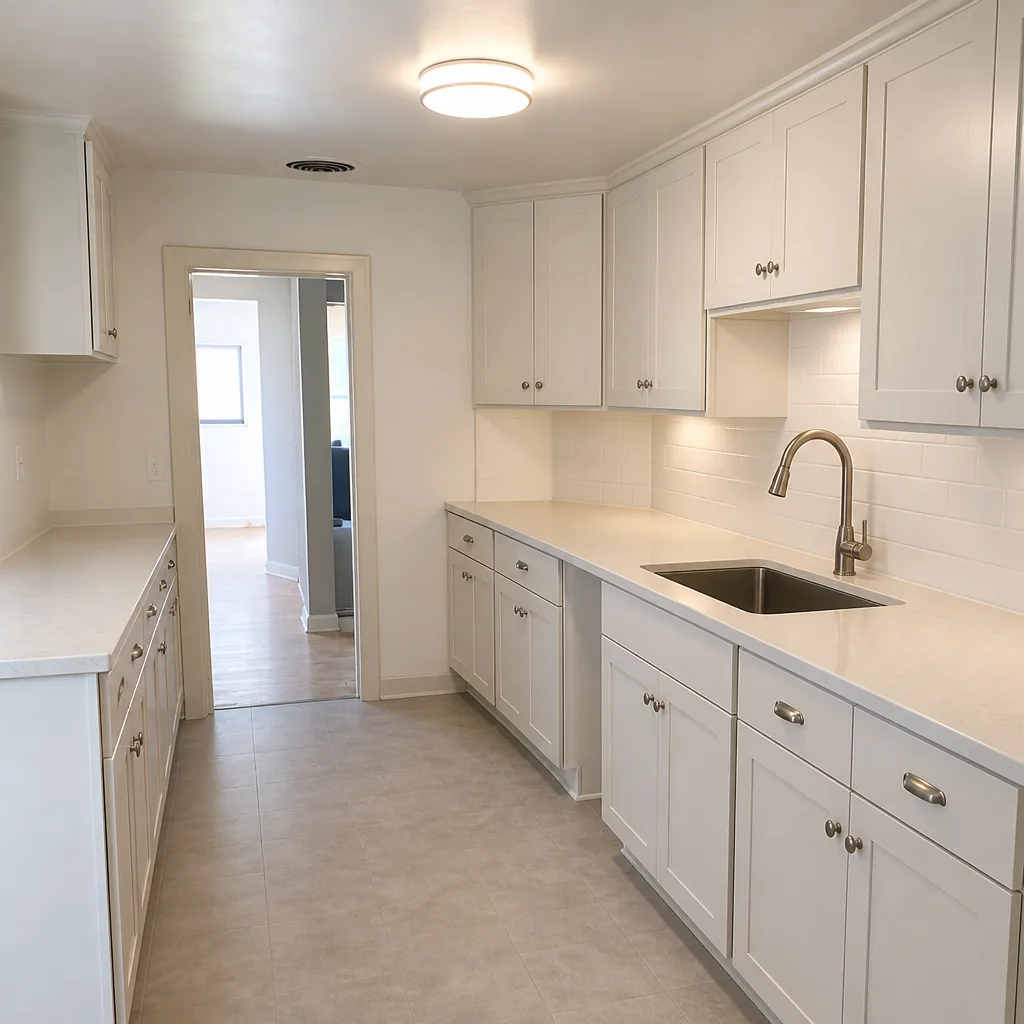 After