Last updated November 18, 2026






Free written scope consultation - allowances, timeline, and change-order rules on paper before a single trade is scheduled
How to Hire a Construction Contractor in Fullerton: A Step-by-Step Guide
A CSLB license lookup takes about 30 seconds. It will tell you a contractor’s license is active, and that’s where most homeowners stop. It won’t tell you that the contractor’s workers’ compensation policy lapsed last month, that a disciplinary action is pending, or that the crew showing up at your house is made up of unlicensed laborers the contractor hired off a classifieds listing. In California, those gaps become your problem, and one of them can make you personally liable for a job-site injury on your own property.
This guide walks you through hiring a construction contractor in Fullerton the way it should be done: full CSLB verification, contract clauses California law actually requires, permit processing that’s specific to this city, and a line-by-line read of the bid so you can spot what’s missing before you sign. You’ll finish with a checklist you can use on your next remodel, roof replacement, ADU, or driveway build.
Quick Answer
To hire a construction contractor in Fullerton, verify the license, workers’ comp coverage, bond, and disciplinary history on the CSLB website in one pass; confirm the contractor can name Fullerton’s current permit turnaround and inspection process; require a written contract with a Mechanics’ Lien notice and a defined change-order procedure; and read the bid line-by-line for the Orange County cost items that lower bids tend to leave out. Never accept a bid that only shows a lump-sum total, and never sign before you’ve seen proof of workers’ comp for the date work will start.
Styles & brands we work with
- Kitchen remodeling
- Bathroom remodeling
- Home additions & ADU
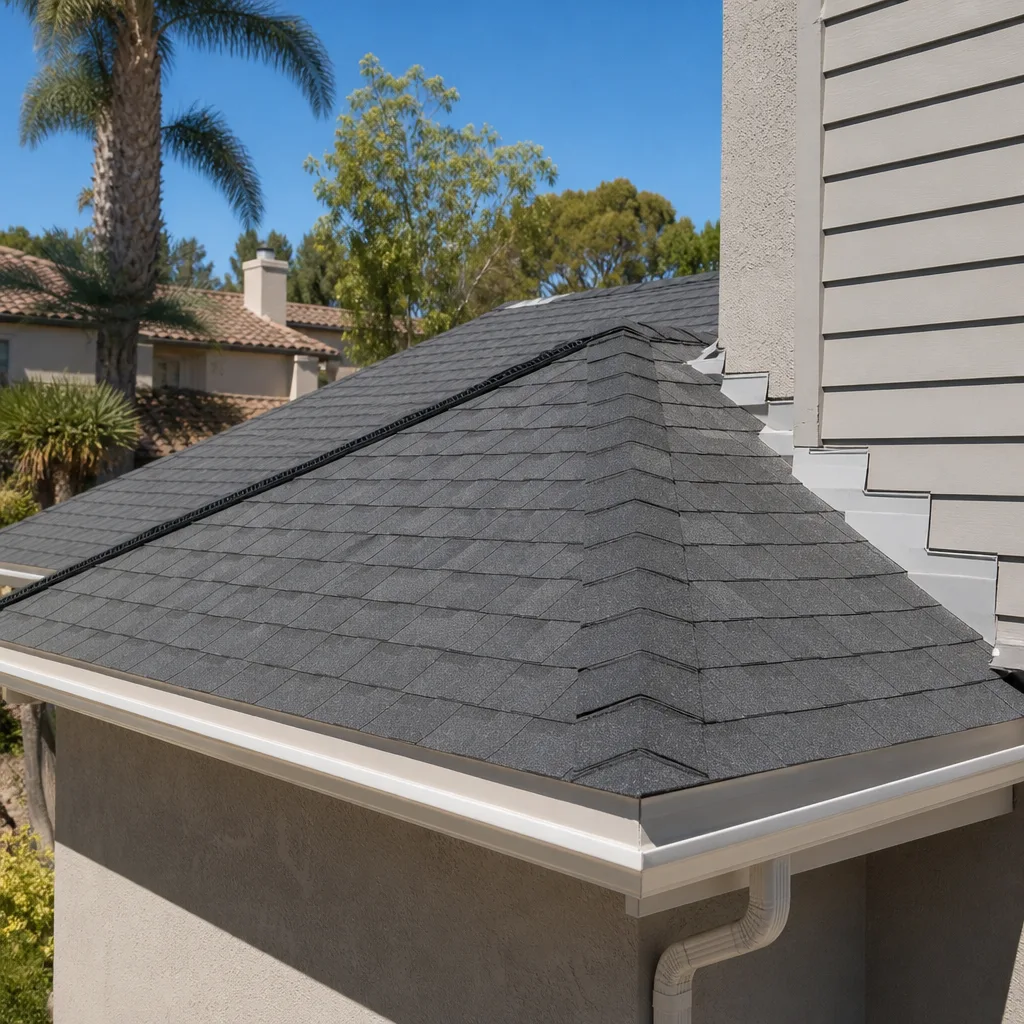
- Roofing
- Windows & doors
- Driveway & pavers
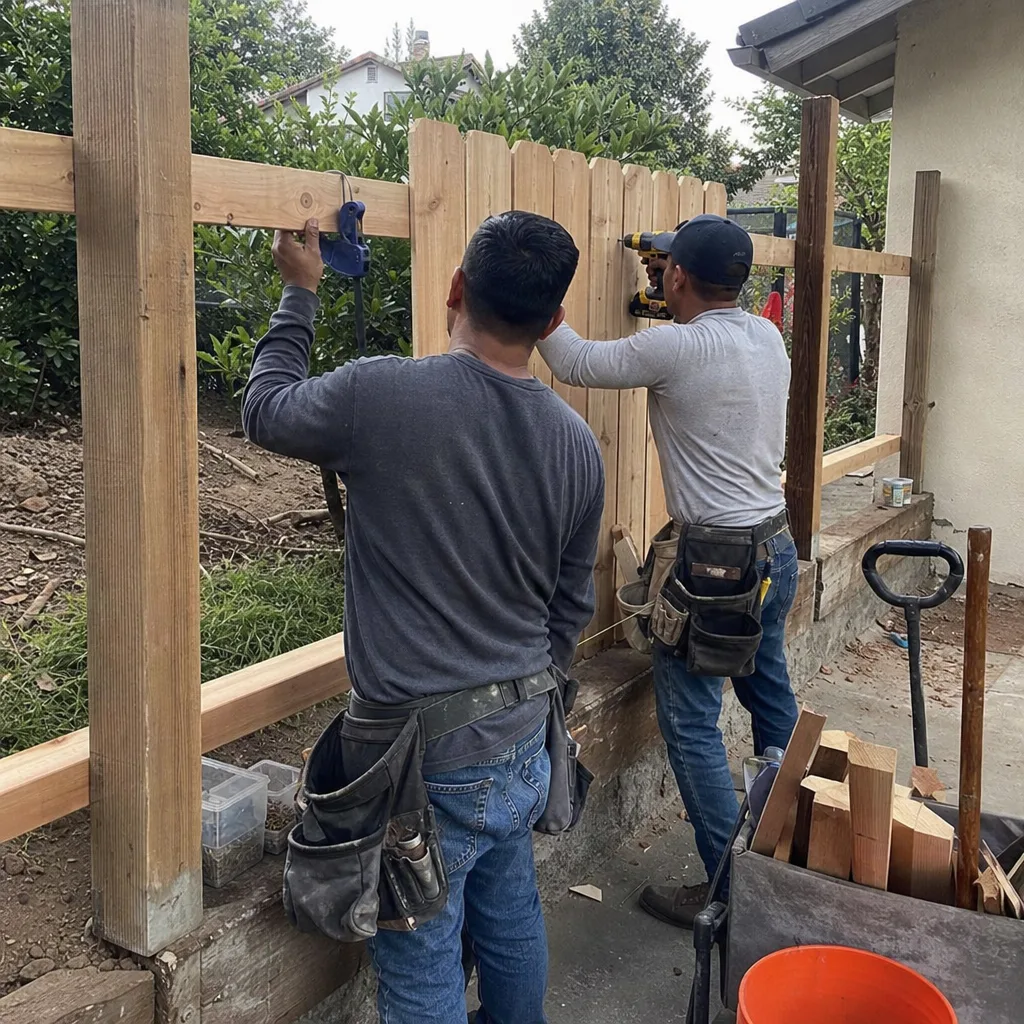
- Fence
Table of Contents
- How do you verify a contractor’s license in Fullerton?
- What contract clauses does California require?
- Why Fullerton permits and inspections matter
- How to read a bid line-by-line
- Fullerton-specific red flags
- Coordinating a multi-phase project
- Why material brands belong in the bid
- Common mistakes to avoid
How do you verify a contractor’s license in Fullerton?
You run a complete CSLB check, not a partial one. The Contractors State License Board license lookup is public and free, and it surfaces more than the status line. A complete verification pass takes four checks, and all four matter for a project in Fullerton.
- License status and classification. Confirm the license is active and the classification matches the work. A general building contractor (B) can take a whole-house project; a specialty classification like C-39 roofing or C-36 plumbing is limited to that trade. If a roofing contractor is quoting your whole kitchen remodel, the classification is wrong.
- Workers’ compensation coverage. The CSLB record shows whether the contractor carries workers’ comp. If it lapsed, or if the contractor claims an exemption while running a crew, the liability for a job-site injury can shift to you as the property owner. This is the single most overlooked check, and it’s why a license lookup alone isn’t enough.
- Bond amount and status. The contractor’s bond is what a homeowner can claim against if the contractor fails to complete the work or violates the contract. The record shows the bond amount and the surety. A lapsed bond is a red flag even if the license stays active.
- Disciplinary history and complaints. The CSLB publishes disciplinary actions, citations, and arbitration results. Read them. A single old citation for a paperwork issue reads very differently from multiple recent actions involving abandonment or unlicensed labor.
Write down the license number, the expiration date, the bond surety, and the workers’ comp carrier. Cross-check the license number against the number printed on the contractor’s written bid and contract. Mismatched numbers are a stop sign, not a rounding error.
For a project in Fullerton, ask the contractor to walk you through the record rather than email you a screenshot. A contractor who knows their own file and can explain it is a different category of hire than one who fumbles the question.
What contract clauses does California require?
California has specific rules about what a home improvement contract must contain, and most boilerplate contracts from out-of-area contractors fail at least one of them. The contract is the second half of verification, and it’s where a lot of Fullerton homeowners get exposed after they’ve already picked the low bid.
Here’s what a compliant home improvement contract in California should include:
- Contractor’s name, address, and license number printed on the contract itself, matching the CSLB record.
- A detailed description of the work, including materials and equipment to be used where it matters. “Install new roof” is not a description; “remove existing composition shingles, inspect sheathing, install GAF Timberline HDZ with underlayment and ridge vent” is.
- A schedule of payments that doesn’t exceed the statutory down-payment limit, with the balance tied to milestones or completion.
- A Mechanics’ Lien warning notice in the required form. This notice tells you that subcontractors and suppliers who aren’t paid can file a lien against your property even if you paid the general contractor in full. It’s a legal requirement, and its absence in a boilerplate contract is a sign the contractor isn’t paying attention.
- A change-order procedure in writing. Any change to scope, materials, or schedule should require a signed change order with the price and time impact spelled out before work continues. Contracts without a defined change-order process are where “we found rot” turns into an unbudgeted four-figure surprise.
- A three-day right to cancel in the required form for contracts signed at your home.
- Warranty terms, including what’s covered, for how long, and who performs the work.
Ask the contractor to point out the Mechanics’ Lien notice and the change-order clause before you sign. A contractor who can’t find them in their own contract hasn’t read it either.
Why Fullerton permits and inspections matter
A contractor who works regularly in Fullerton should be able to tell you, in conversation, roughly how long a residential permit takes to process through the city’s building division right now, and what the inspection sequence looks like for your project type. If they can’t, that’s information. It means they’re either new to the city or they’ve been pulling permits somewhere else.
Permits in Fullerton are handled through the city’s building division, and the specific turnaround shifts with how busy the counter is and whether your project needs plan review. A kitchen remodel with no structural change moves faster than an addition that needs structural and energy review. A roof replacement is usually straightforward but still requires a permit and at least one inspection. Driveway and hardscape work has its own questions about right-of-way and drainage.
What a Fullerton-experienced contractor should be able to describe:
- Whether your project type typically requires plan review, and roughly how long that review has been taking.
- What inspections happen at which phase (for a roof, for framing, for final), and whether the contractor schedules them or expects you to.
- How the contractor handles corrections if an inspector flags something mid-project.
- Whether permits are pulled in the contractor’s name and license number, which is the correct structure. If a contractor asks you to pull the permit as the homeowner, that’s a known workaround that shifts liability and inspection responsibility onto you.
One common issue in Fullerton and across Orange County is contractors who pull the permit correctly in their own name and then sub out the actual work to unlicensed labor. The permit looks clean; the crew isn’t. Ask directly who will be on-site, whether those workers are employees or subcontractors, and whether the subcontractors’ licenses and workers’ comp can be verified too.
If you’re building a home addition or ADU in Fullerton, the permit conversation gets more involved. You can read more about our home additions & ADU process, which includes both traditional stick-built additions and prefab or modular systems from manufacturers like Abodu, Dvele, Mighty Buildings, and Boxabl. The permit path differs meaningfully between the two, and it’s worth asking any contractor to walk you through which path they’d recommend and why.
How to read a bid line-by-line
This is where most hiring mistakes actually happen. Two contractors can hand you bids that look $15,000 apart on the total, and once you read the lines you’ll find the difference isn’t price, it’s scope. One bid includes the work; the other excludes it and hopes you don’t notice until the change order arrives.
Read every bid against these line items. If a category is missing, ask the contractor to add it with a price before you compare totals.
- Demolition and disposal. Tear-out is labor plus dumpster plus tipping fees. In Orange County, construction debris typically goes to the Olinda Alpha landfill in Brea, and disposal costs are a real line item for roof, kitchen, bath, and hardscape tear-outs. A bid without a disposal line either under-bid the job or plans to bury the cost.
- Materials, named. “Architectural shingles” is not a line item. “GAF Timberline HDZ” is. “Quartz countertop” isn’t a line item; “Caesarstone” is. Naming the brand in the bid is what protects you from substitution after the contract is signed.
- Permit fees and plan review. The contractor should show permits as a line item or state clearly that they’re included. Fullerton’s fees scale with project value and type.
- Regional material pricing. Concrete, lumber, and finish materials are priced regionally, and a bid priced against a Los Angeles County supplier sheet can look low relative to a bid that sourced Orange County material at realistic current pricing. Ask where the material is coming from and whether the pricing reflects current lead times.
- Soil testing and geotechnical work if the project involves grading, retaining walls, or a new foundation. This is one of the most commonly omitted lines on ADU and addition bids. If the bid is silent, ask.
- Subcontractor line items for electrical, plumbing, and HVAC on remodels, with the subcontractor’s license and workers’ comp shown.
- Final cleaning and punch list as a distinct phase with a defined completion standard.
- Warranty terms written into the bid, not promised verbally.
A bid that shows only a lump-sum total is a bid you can’t compare to anything. Ask for the breakdown. A contractor who resists itemizing is telling you something about how the change orders will go.
Fullerton-specific red flags
Some hiring problems show up everywhere; a few are specific to the Fullerton market. These are the ones we’ve watched catch homeowners here.
- A Fullerton address that turns out to be a mail drop or a relative’s house. Ask where the contractor’s crews are actually based and which subcontractors they’ve worked with in Orange County. A contractor based in LA County with no established Fullerton or North Orange County relationships will struggle to schedule inspections, get material delivered on time, or reach a subcontractor quickly when a problem comes up.
- Bids priced off Los Angeles County labor and material sheets. The totals look low until the change orders arrive. Ask the contractor to confirm the bid reflects current Orange County material pricing.
- Permits pulled in the contractor’s name, unlicensed labor on site. The paperwork looks correct; the crew doesn’t. Ask to see subcontractor licenses and workers’ comp certificates for any trade they’re bringing on.
- No familiarity with Fullerton’s building division. If the contractor can’t tell you roughly how long permits are taking or what inspection sequence to expect for your project, they’re not working here regularly.
- Verbal-only change orders. Anything that changes scope should be a signed change order with a price. Verbal “we found something” calls are how projects end up 30% over budget.
- Pressure to sign before you’ve done the CSLB check. No legitimate contractor needs a signature today.
None of these are reasons to walk away on their own. They’re reasons to ask the next question before you sign.
Coordinating a multi-phase project
Many of the projects we see in Fullerton aren’t single-scope. A homeowner replacing a roof also needs new windows, or a kitchen remodel runs alongside a bathroom renovation, or an ADU addition comes with a new driveway and fence. Multi-phase projects create a specific hiring decision: do you hire one contractor for the whole property, or separate contractors for each trade?
Coordinating separate contractors for a multi-phase project is doable, and it’s how a lot of homeowners do it. The costs show up in schedule and in transitions. Each contractor schedules their own trades, and when the roof crew needs to come after the window crew, someone has to own that handoff. If nobody does, you do.
Hiring one contractor for the full scope means one schedule, one contract, one point of accountability for the handoffs. On a multi-phase project, that’s often worth more than it sounds: the window installation affects the roof flashing detail, the kitchen plumbing affects the bathroom rough-in schedule if they’re running at the same time, and the driveway approach has to be scheduled after the ADU foundation work is done. One team holding all of those threads is the difference between a sequence and a scramble.
If you’re tackling a driveway, patio, or hardscape project alongside other work, our driveway & pavers page covers how hardscape sequencing works when it overlaps with other exterior work. Fence installation has similar coordination issues if it runs along a property line where other work is happening, and our fence installation page walks through those.
Why material brands belong in the bid
Brand names in a bid aren’t brand-dropping. They’re the specific mechanism that prevents bait-and-switch substitution after the contract is signed. A bid that says “quartz countertops” gives the contractor freedom to install whatever’s cheapest; a bid that names Caesartone or another specific brand locks the material.
For a Fullerton project, here’s what naming brands in the bid actually looks like by category:
- Roofing. The major residential shingle manufacturers (GAF, CertainTeed, Owens Corning, IKO, Atlas, Tamko, and Boral) all publish product lines with different specifications and price points. “Architectural shingles” covers dozens of products; “GAF Timberline HDZ” covers one.
- Kitchens. Cabinets from KraftMaid or Wellborn, countertops from Cambria, Caesarstone, or Silestone. Fixtures from Kohler, Moen, or Blanco if the sink and faucet are part of the scope.
- Bathrooms. Fixtures from Kohler, Toto, Grohe, or Moen. The difference between a builder-grade fixture and a spec’d Kohler or Grohe fixture shows up in the line item, and it shows up again in ten years when the finish is still holding.
- Fencing. Barrette, Master Halco, Jerith, Bufftech, and ActiveYards each make different lines for vinyl, aluminum, and ornamental fencing, and the correct choice depends on your property, your HOA, and how the fence will hold up in Fullerton’s sun. Naming the line in the bid is what pins the material.
- Pavers and hardscape. Belgard, Unilock, and Techo-Bloc each publish full product lines. The name in the bid is the difference between the specific paver the contractor showed you in a sample and whichever one is on sale when the truck arrives.
Across a whole-property project, our approach is to work with a roster of 50+ name-brand manufacturers so that the brand in the bid is the brand you actually get. You choose the brand, we handle the build. If a bid excludes brand names, ask the contractor to add them before you compare totals against another bid. Otherwise you’re comparing two different jobs.
See the difference
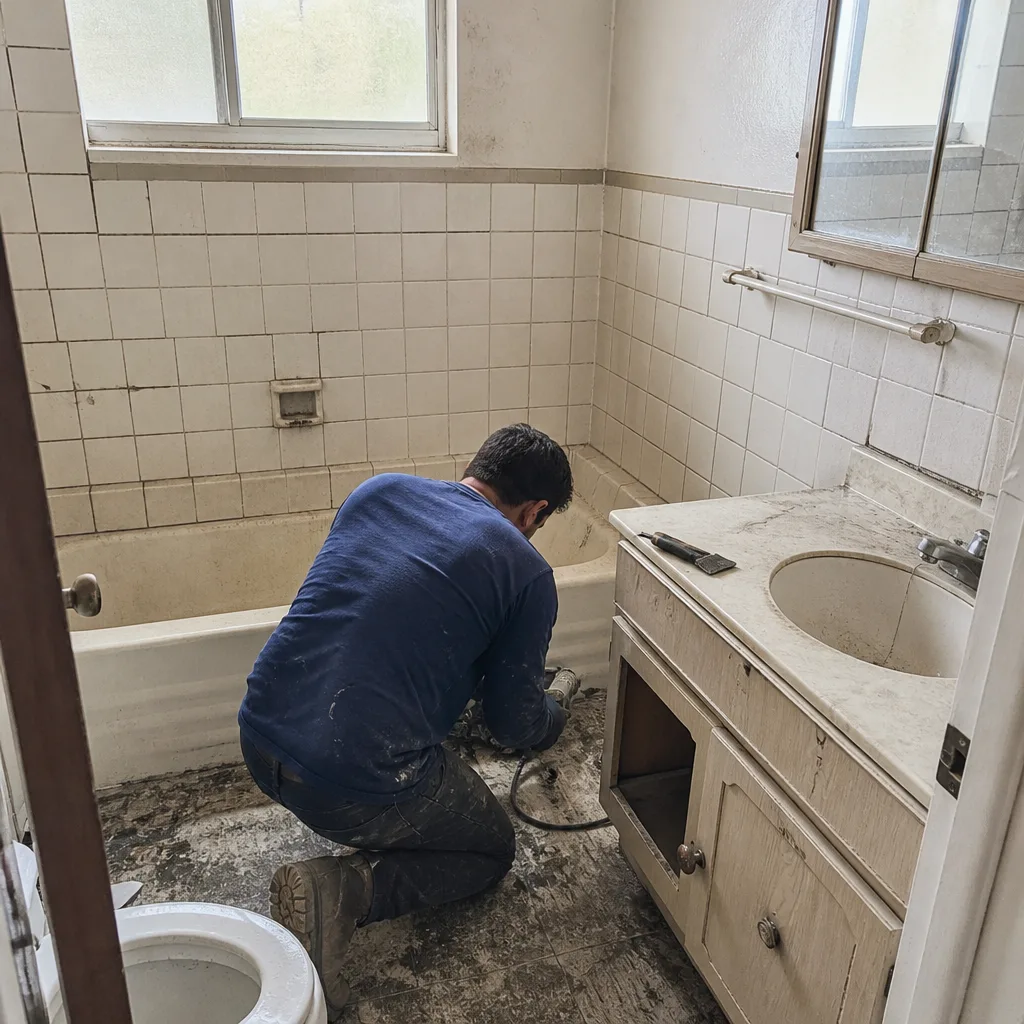 Before
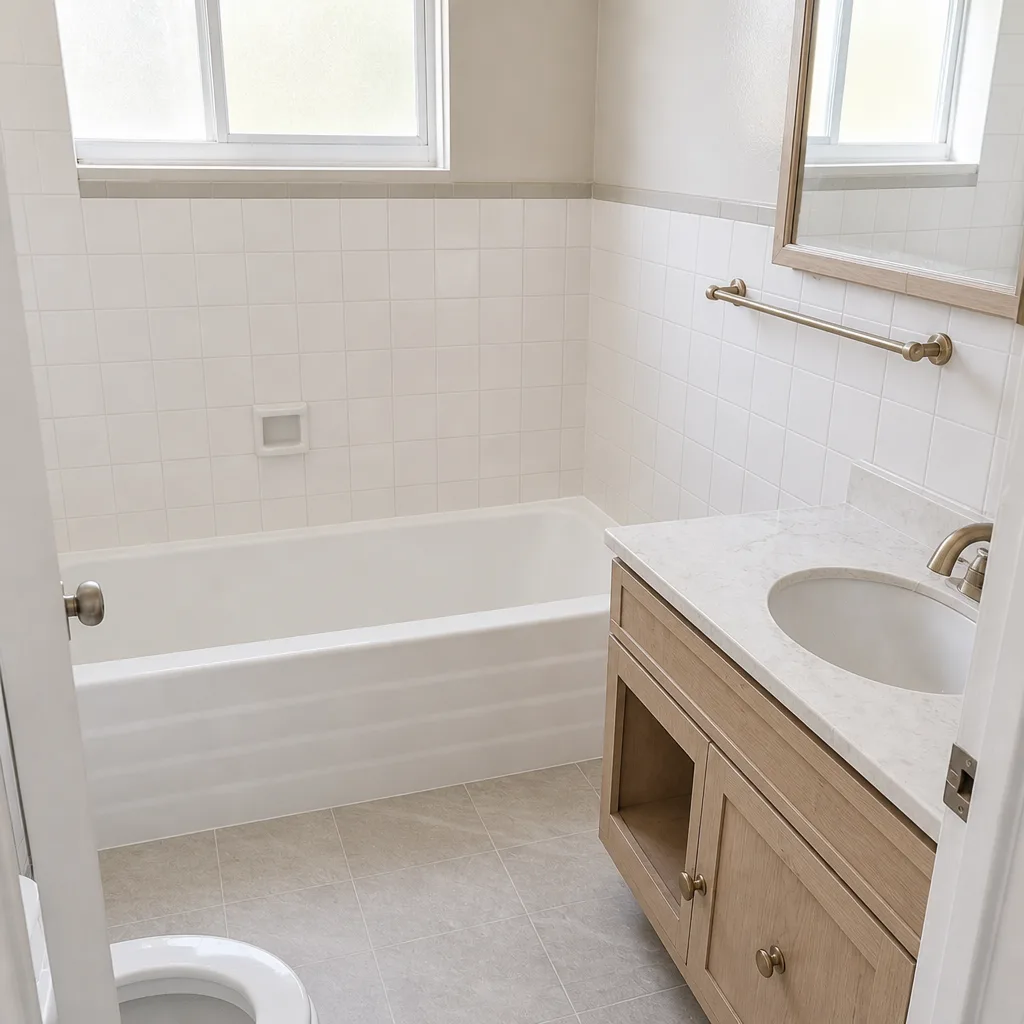 After
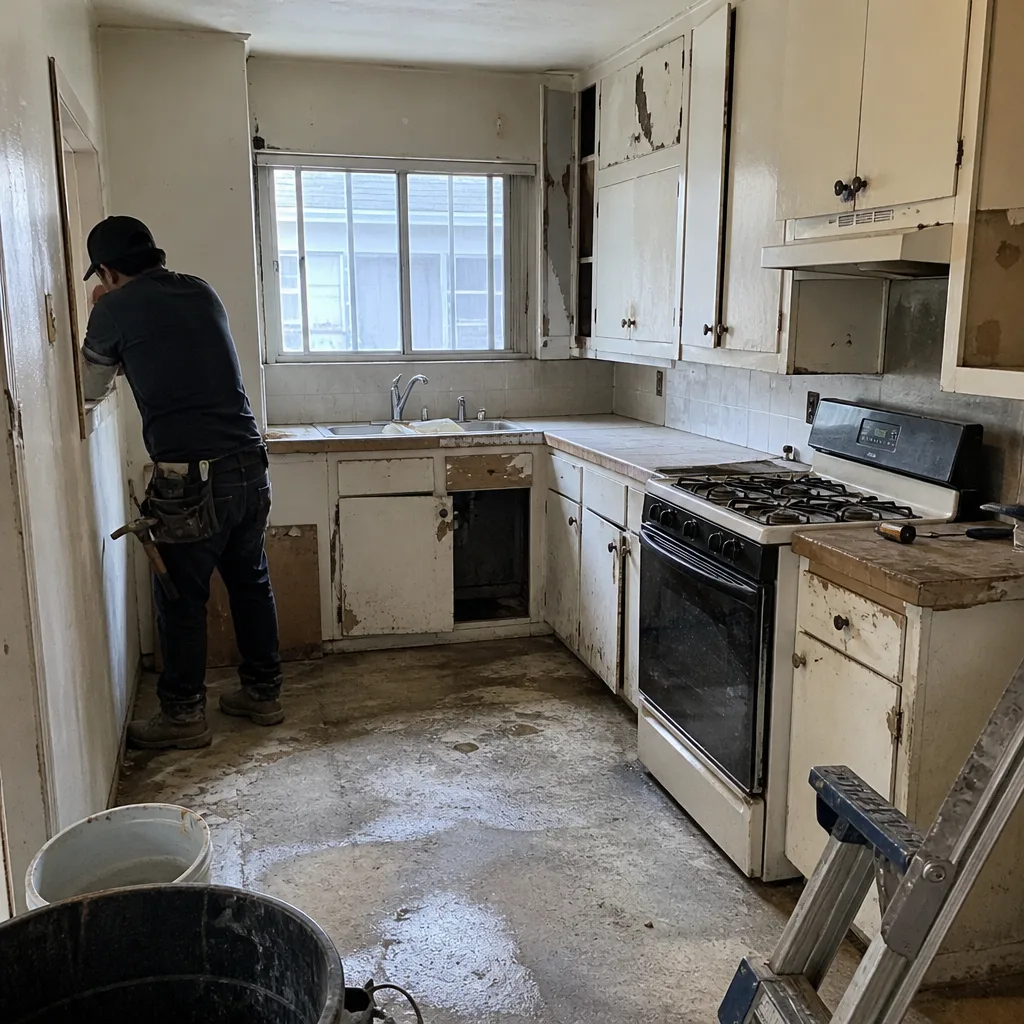 Before
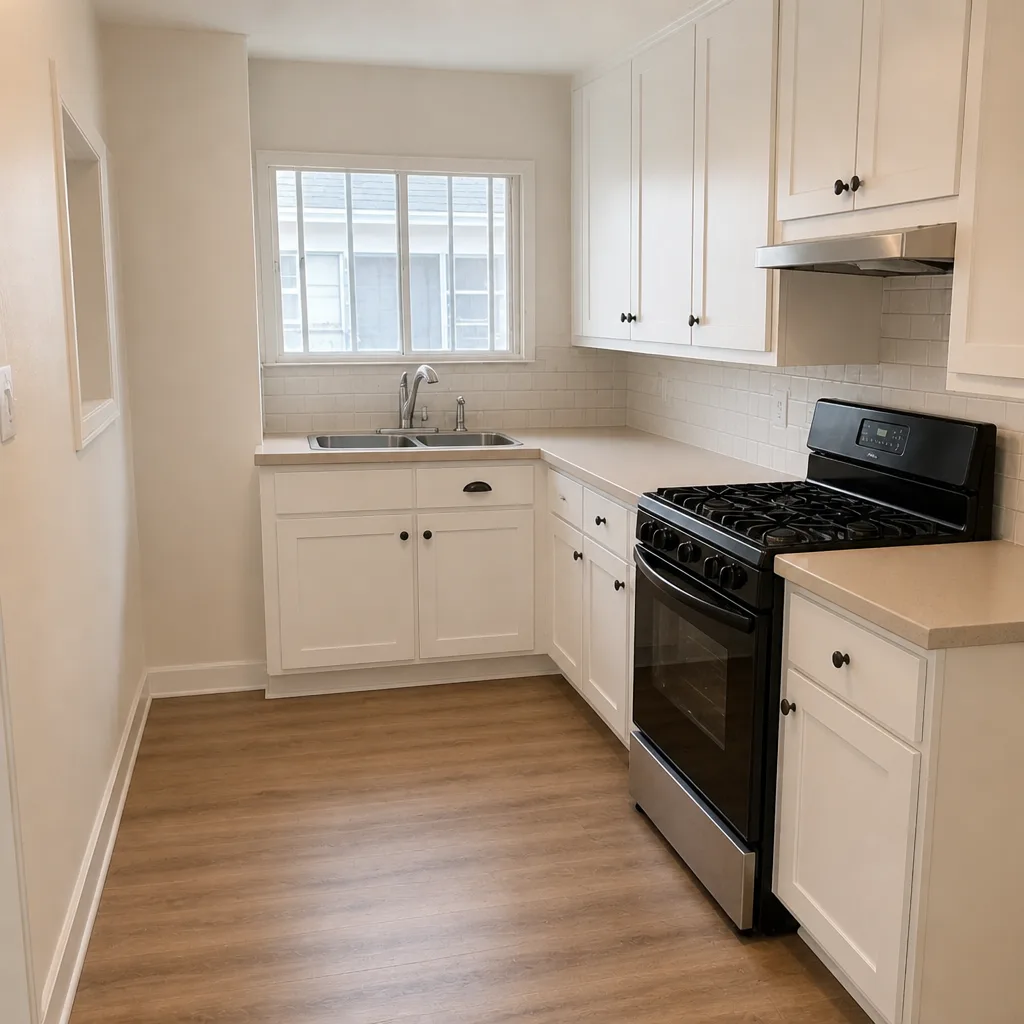 After
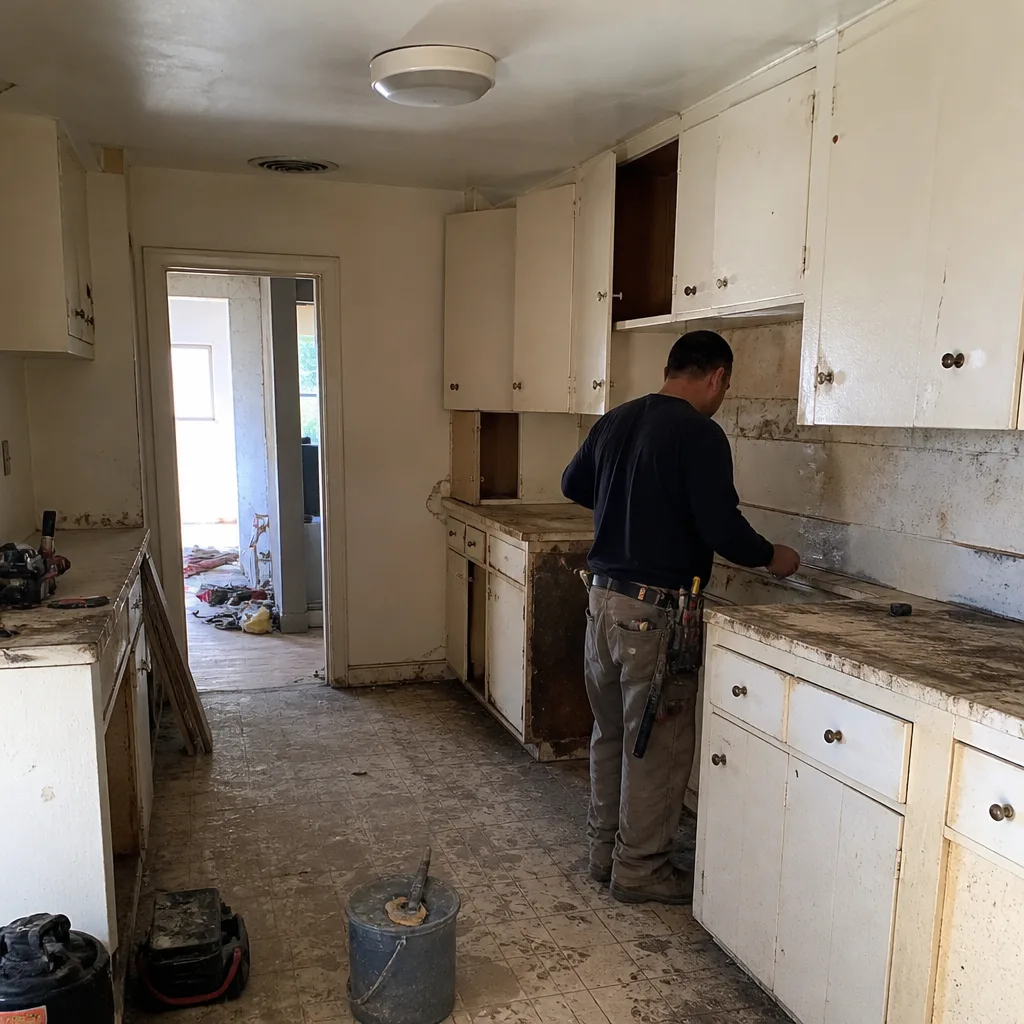 Before
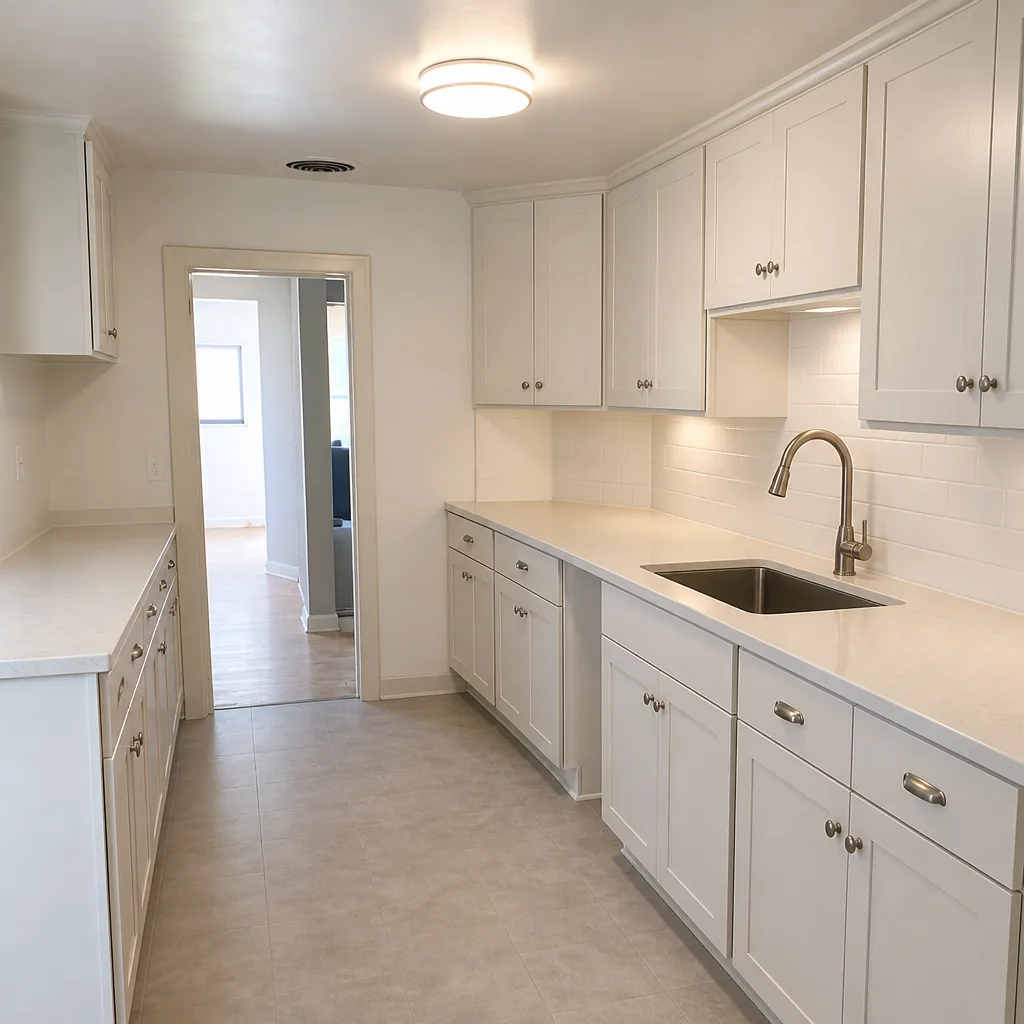 After
How do you check a contractor’s references in Fullerton?

Ask for references from projects in Fullerton or North Orange County within the last year, and call them. Two or three is enough if they’re specific. What to ask: did the project finish within the schedule the contractor quoted, did the final bill match the contract, and did the contractor handle corrections after the final inspection without pushback.
References from out-of-area projects don’t tell you much about how the contractor will handle Fullerton’s inspection sequence or a material delay across Orange County. The local reference is the one that matters.
Common Mistakes to Avoid
- Checking only the license status and skipping workers’ comp. The CSLB record shows more than “active,” and a lapsed workers’ comp policy can shift liability to you. Check the whole record in one pass.
- Comparing lump-sum totals across bids. Two bids that look $15,000 apart are often two different scopes, not two prices. Read the line items and ask for anything missing to be added with a price.
- Accepting a bid without named materials. “Quartz countertop” lets the contractor install whatever is cheapest. Ask for the specific brand and product line before you sign.
- Skipping the Mechanics’ Lien notice check. California requires the notice in home improvement contracts, and its absence is a signal the contract is boilerplate. Find it, read it, and ask the contractor to explain it.
- Not asking about disposal and soil testing on bigger projects. Olinda Alpha tipping fees and geotechnical work are common omissions on addition and ADU bids. If they’re not line items, ask.
- Hiring a Fullerton-address contractor who doesn’t actually work here. A mail-drop address in Fullerton with crews based in LA County will show up on your project in the schedule. Ask where the crews work and which local subcontractors they use.
- Allowing verbal change orders. Any scope change should be a signed change order with a price before work continues. Verbal changes are how projects drift over budget.
When to Call a Professional
Some projects are genuinely manageable as DIY: a fence repair, a single window swap, a small paver patch. Most of what we see in Fullerton isn’t. Roofing at height, any electrical or plumbing work behind a wall, structural changes, permit-required work, and anything involving a gas line or a main electrical panel are jobs where the risk of a mistake is real and the cost of correcting it later is higher than the original work would have been. On those projects, the right call is a licensed professional with verified workers’ comp and a written contract.
If you’re planning a kitchen or bathroom renovation, a roof replacement, a home addition or ADU, new windows and doors, a driveway and hardscape, or a fence, Construction Fullerton offers free estimates in Fullerton. Call (844) 834-8322. We answer 24/7. Fast dispatch from 7am to 7pm, Sunday through Friday.
Frequently Asked Questions
The cost of hiring a construction contractor in Fullerton depends entirely on project scope, since there’s no standard rate for a contractor’s time. Bids typically itemize labor, materials, permits, and disposal as separate line items, and the reliable way to compare is against a fully itemized bid rather than a lump-sum total. For an exact quote on your project, call (844) 834-8322. Estimates are free.
Yes. Workers’ compensation coverage is one of the four things a CSLB license check surfaces, and a lapsed policy is the most common problem homeowners miss. In California, if an uninsured contractor or crew is injured on your property, liability can shift to you as the homeowner. Verify the carrier, not just the “active” status line. Any contractor should be able to confirm coverage for the date work will start.
A California home improvement contract should include the contractor’s name, address, and license number, a detailed description of the work, a payment schedule within the statutory limits, a Mechanics’ Lien warning notice in the required form, a written change-order procedure, the three-day right to cancel, and warranty terms. If any of those is missing, ask the contractor to add it before you sign. Anyone who resists is telling you how the change orders will go.
Permit timelines in Fullerton depend on project type and whether plan review is required. Straightforward projects like a roof replacement or a fence move faster than additions and ADUs that need structural and energy review. Ask your contractor what they’re seeing for your specific project type right now, and whether the permit will be pulled in their name and license number. If the contractor can’t answer that, that’s information.
Not if the contract is written correctly. Scope, materials, and schedule should be fixed in the written contract, and any change to the scope should require a signed change order with the price and time impact stated before work continues. Verbal “we found something” calls are how projects end up well over budget. Ask your contractor to point out the change-order procedure before you sign, and get pricing for anything not in the original scope in writing.
Yes. Permits should be pulled in the contractor’s name and license number, not the homeowner’s. If your contractor asks you to pull the permit as the homeowner, that’s a workaround that shifts inspection responsibility and liability onto you. Ask who pulls the permit and confirm the name and license number on the permit match the contract.
The Bottom Line
Hiring a contractor in Fullerton comes down to four checks done before you sign anything: full CSLB verification including workers’ comp and the bond, a contract with a Mechanics’ Lien notice and a defined change-order procedure, a permit pulled in the contractor’s name with a demonstrated familiarity with Fullerton’s building division, and a line-by-line bid that names materials and includes the Orange County cost items that lower bids routinely omit. Do all four and you’ve eliminated most of the risk that catches homeowners in this market. Skip any one of them and you’re exposed to the failure mode that check was designed to catch.
If you want a bid that meets all four checks on a full-scope project, or you’re looking for a single team to coordinate a multi-phase renovation or addition, Construction Fullerton is the place to start. Our technicians have up to 14 years of experience, and every written quote is itemized with named materials. Call (844) 834-8322 for a free estimate. We answer 24/7. Fast dispatch from 7am to 7pm, Sunday through Friday.
Written by the team at Construction Fullerton.